
Selection Guides
Short, practical walkthroughs on picking the right nozzle for the duty.
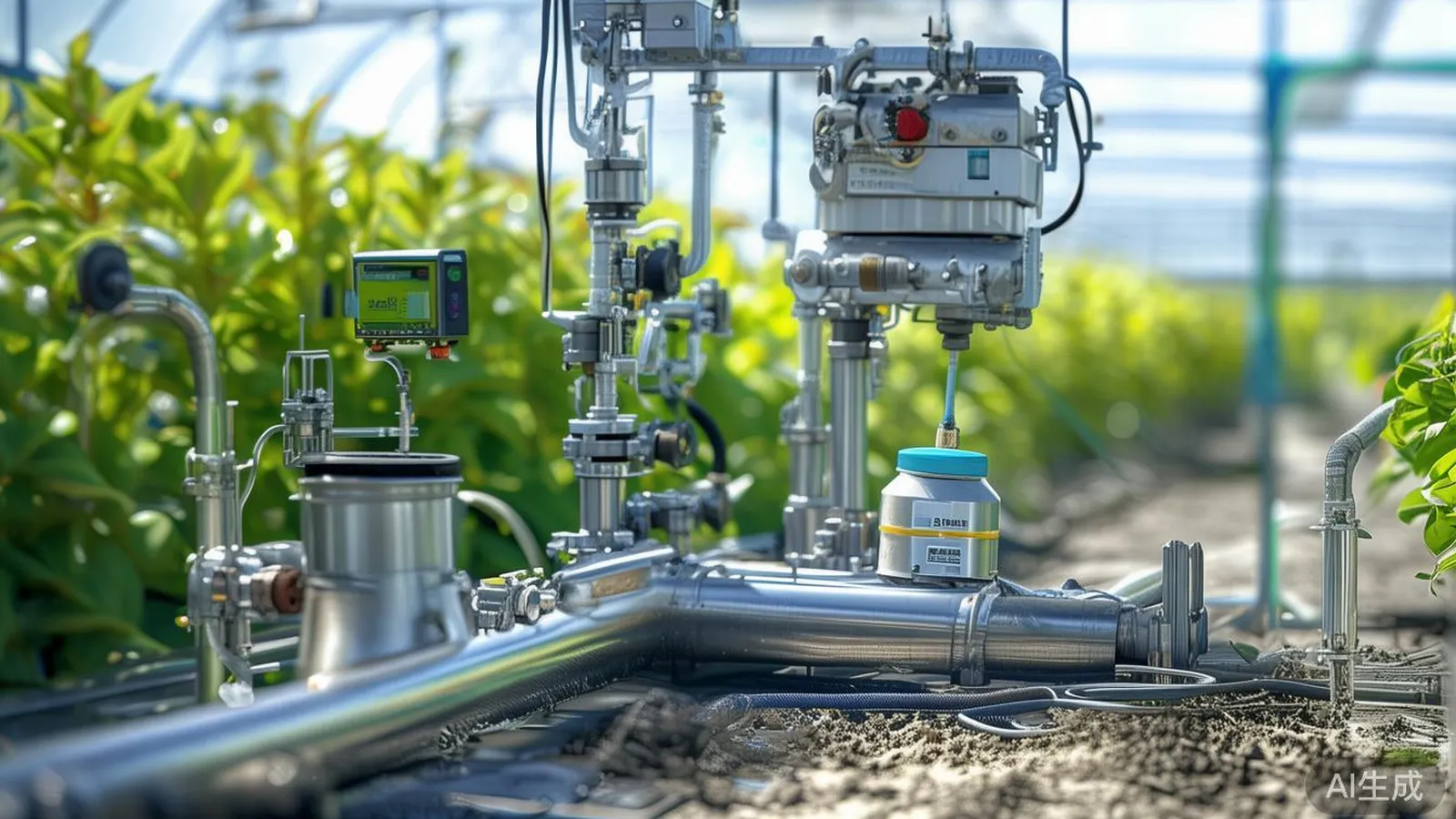
Buying a Fertigation Pump: Metering Head, Diaphragm or Eductor
A 10 m³/h greenhouse header dosing 120 ppm of a 15 percent stock needs 8.0 L/h of stock, which is 9.6 L per day and 67.2 L per week. This guide compares metering, diaphragm and centrifugal with venturi injection, works the dose arithmetic, and sets out materials, backflow protection and dose verification.
Oct 12, 2026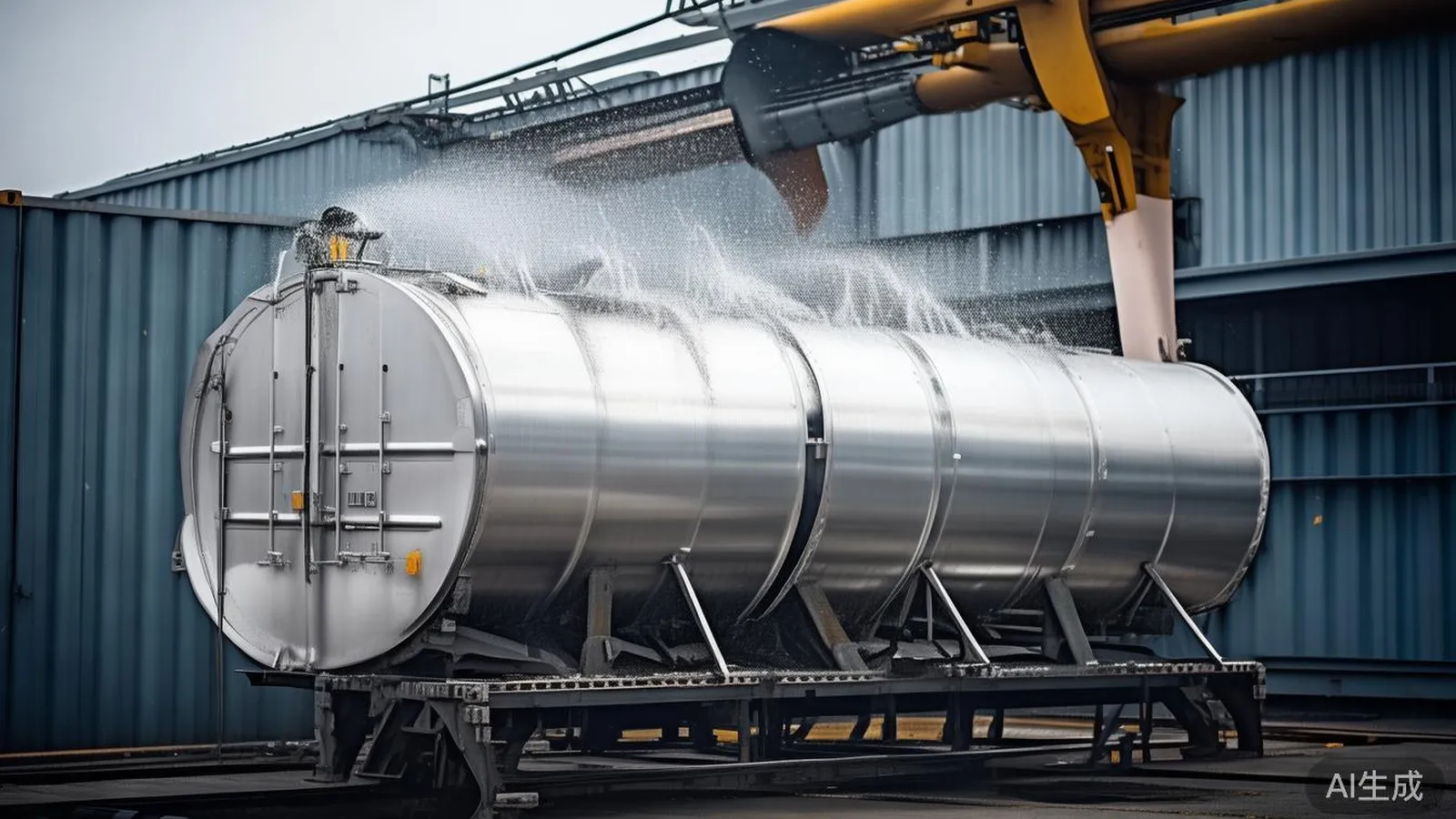
ISO Tank Cleaning Between Cargoes: How a Depot Specifies the Heads
A depot cleaning a 20 ft tank container between cargoes works from class, coverage and water. This guide covers T11 to T50 residues, rotary jet head selection for a 17,500 to 26,000 L vessel, pattern time, the turnover cross-check and a three-stage rinse that cuts fresh water to 2.0 m3 per unit.
Oct 11, 2026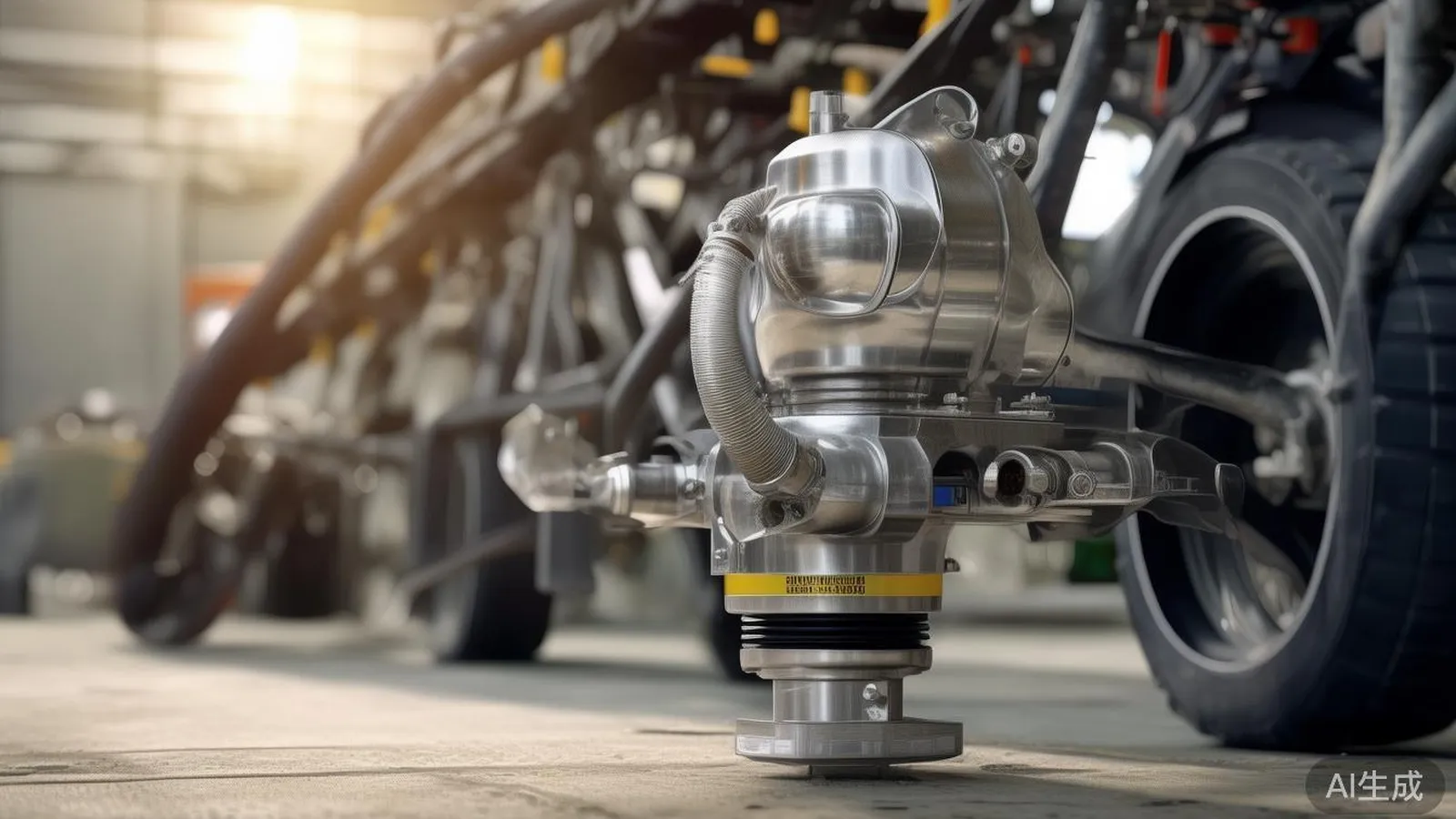
Sprayer Pump Sizing for a Boom That Cannot Hold Its Rate
A 12 m boom at 120 L/ha and 16 km/h demands 38.4 L/min, so the sprayer pump must deliver about 44 to 46 L/min after a 15 to 20 percent margin. This guide sizes pump flow, pressure and drive power against the boom, then verifies the result on clean water.
Oct 10, 2026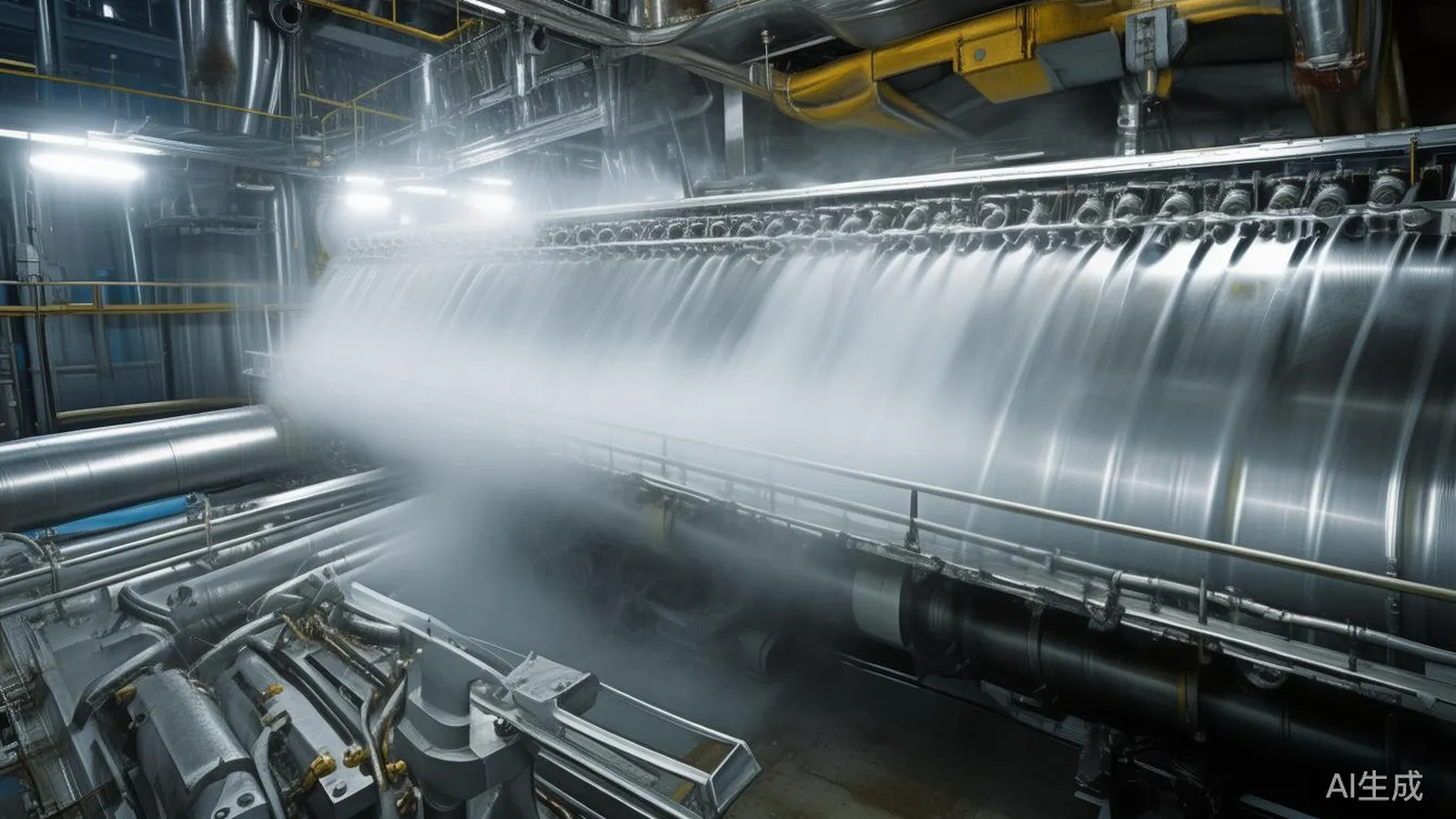
Inlet Fogging for Gas Turbines: Output, Water Spec and Retrofit Risk
High-pressure inlet fogging cools gas turbine inlet air toward the wet-bulb limit and recovers much of a hot-day derate that can reach 40 percent of nameplate. This guide covers droplet size versus evaporation distance, wet-bulb approach arithmetic, RO water spec, manifold layout, fouling and erosion failure modes, and the approach percent acceptance test.
Oct 9, 2026
Sizing Railcar Cleaning Equipment When the Vessel Geometry Is Fixed
Tank car nozzle sizing runs against a geometry you cannot change: 30,000 to 32,000 US gal, 8 to 10 ft inside diameter and an 11 to 16 in manway that caps every head. Covers three mounting options, a 703 L/min orifice example, 7.7 to 8.8 kW shaft power, caustic bands by residue class, exchange passes and rinse endpoints.
Oct 7, 2026
Reading a Burner Nozzle Chart: Which Size Fits?
A burner nozzle chart is a rated promise: flow, angle and pattern hold only at the stated reference pressure and viscosity. The 1.50 flow ratio of a #4 to #6 element step, the width formula behind every nozzle angle, and the square root between psi and gph turn that promise into a verified firing rate.
Oct 5, 2026
Spray Ball, Rotating Nozzle Or Rotary Jet: Choosing For One Vessel
A static spray ball at 2 bar delivers roughly 0.1 to 0.3 bar of surface impact. A rotating tank cleaning nozzle or rotary jet head earns its cost when soil needs 0.5 to 1.0 bar.
Oct 5, 2026
Which Tractor Sprayer Nozzles Fit a 3 Point Boom at 15 GPA?
A three point boom applying 15 GPA at 6 mph over 60 ft needs 10.9 gpm total, 0.91 gpm on each tip at 60 inch spacing. This guide ties boom width, 110, 80 and 65 degree fan angles, the pump pressure band and the gpm formula to a stable target GPA.
Oct 5, 2026
How to Size a Chemical Tank Cleaning Package: Residue, Material and Rinse Order
A 1000 L IBC holds 0.5 to 1.1 L of process film after a normal drain, and 400 L of 30 percent amine residue can release about 110 MJ of neutralization heat when acid follows it into the vessel. This guide sizes the wash package for day tanks and IBCs: residue risk math, an orifice sample at 1.5 bar, a PP to PTFE material matrix, and the rinse order that never puts water on a reactive concentrate.
Oct 4, 2026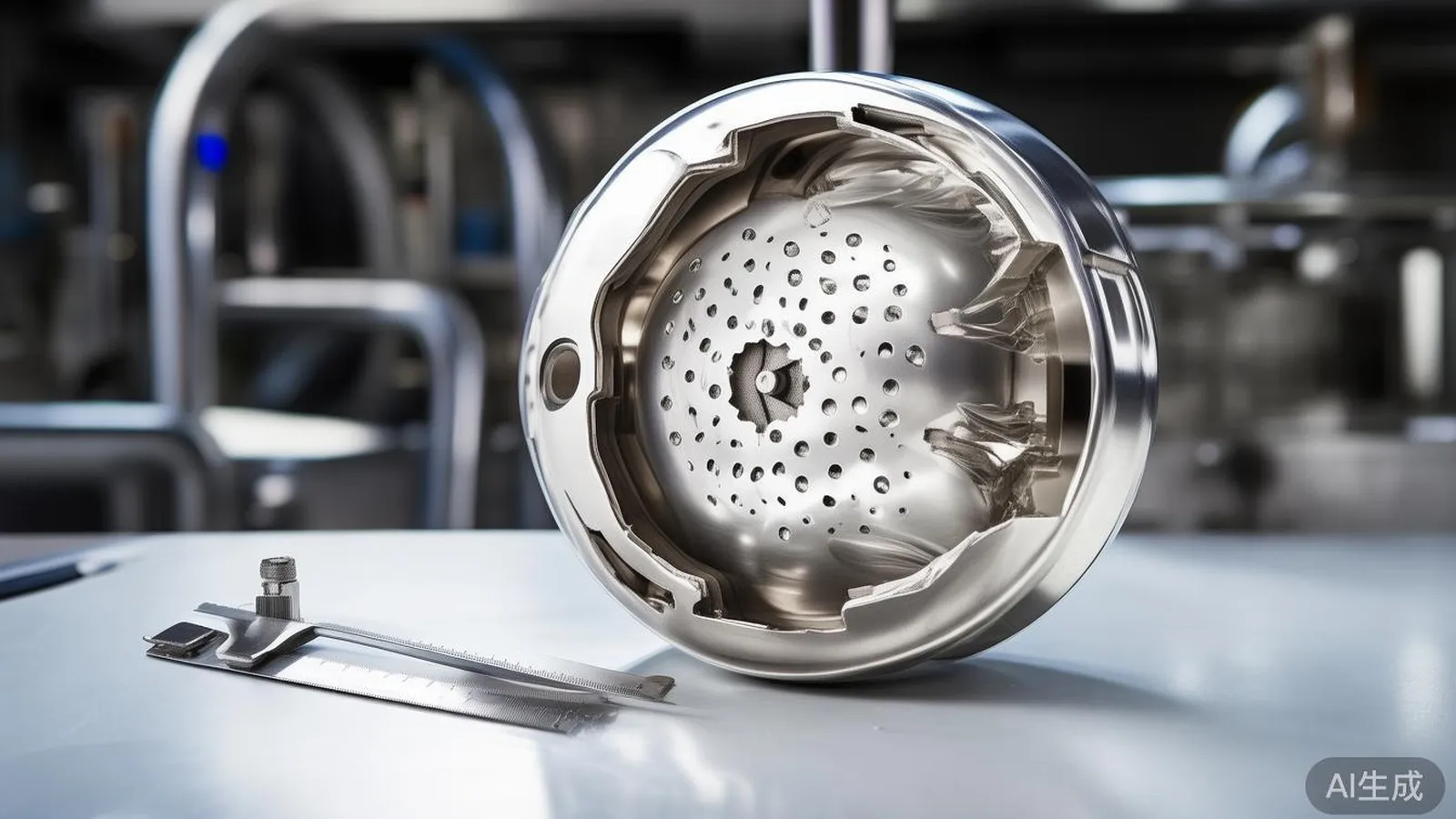
Spray Ball Sizing: Hole Pattern, Orifice Flow and Coverage
A static spray ball sizes from the orifice, not the ball. Total flow divides across the hole count, so 12 L/min over 24 holes is 0.5 L/min per hole and a 0.74 mm hole at 2 bar. This guide works the hole pattern geometry, the published 3 gpm per foot of circumference rule, pressure drop and a riboflavin coverage test with a swab ATP pass band.
Oct 4, 2026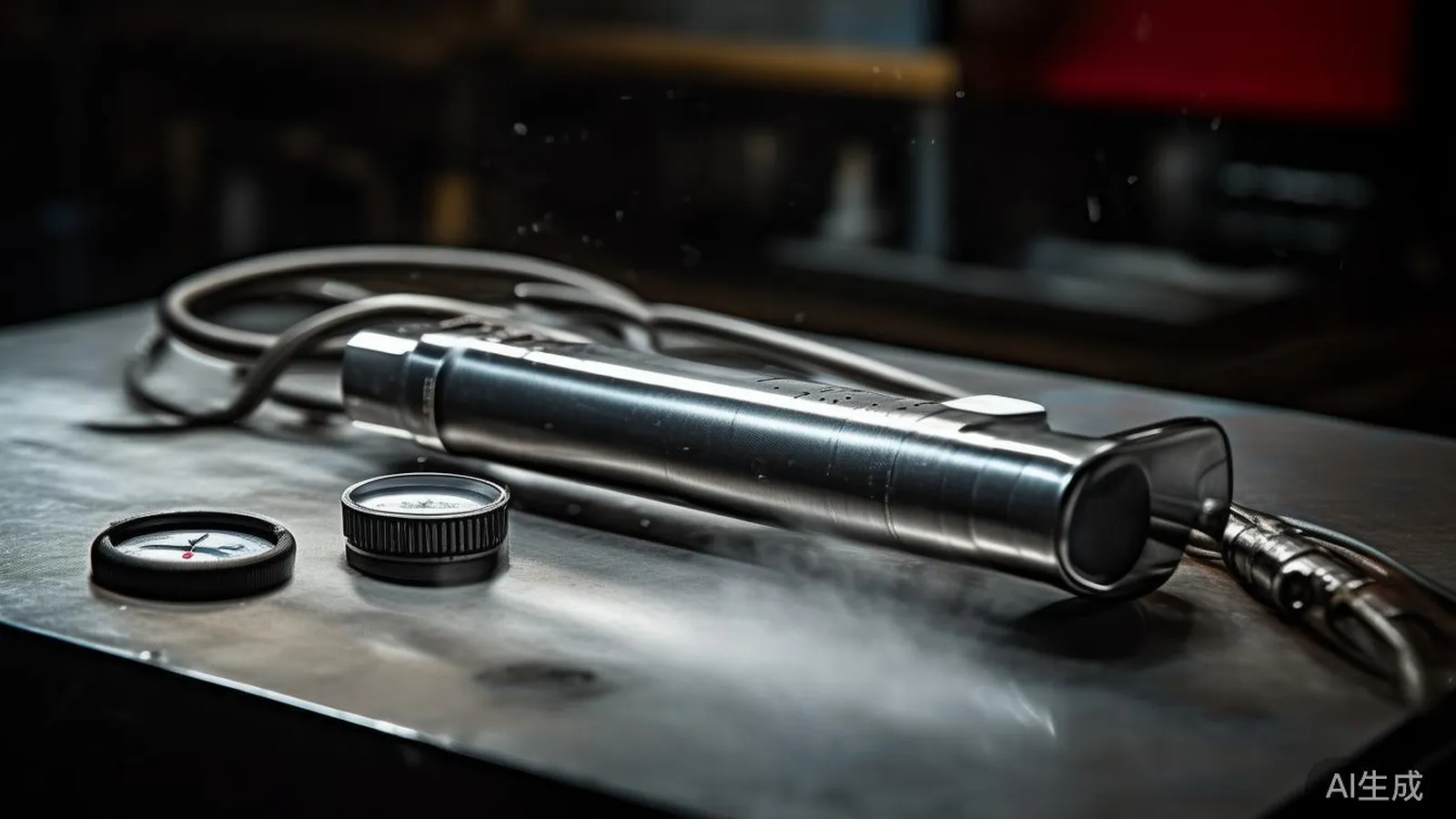
How Do You Choose an Air Gun Nozzle for Blow-Off, Drying and Chip Removal?
An air gun nozzle is the part of the tool that sets flow, force, noise and legal compliance. This guide sizes the tip with choked-flow and momentum arithmetic, compares round, flat, knife and air-inducing styles, checks dBA against OSHA 1910.95, and prices a blow-off station per shift.
Oct 2, 2026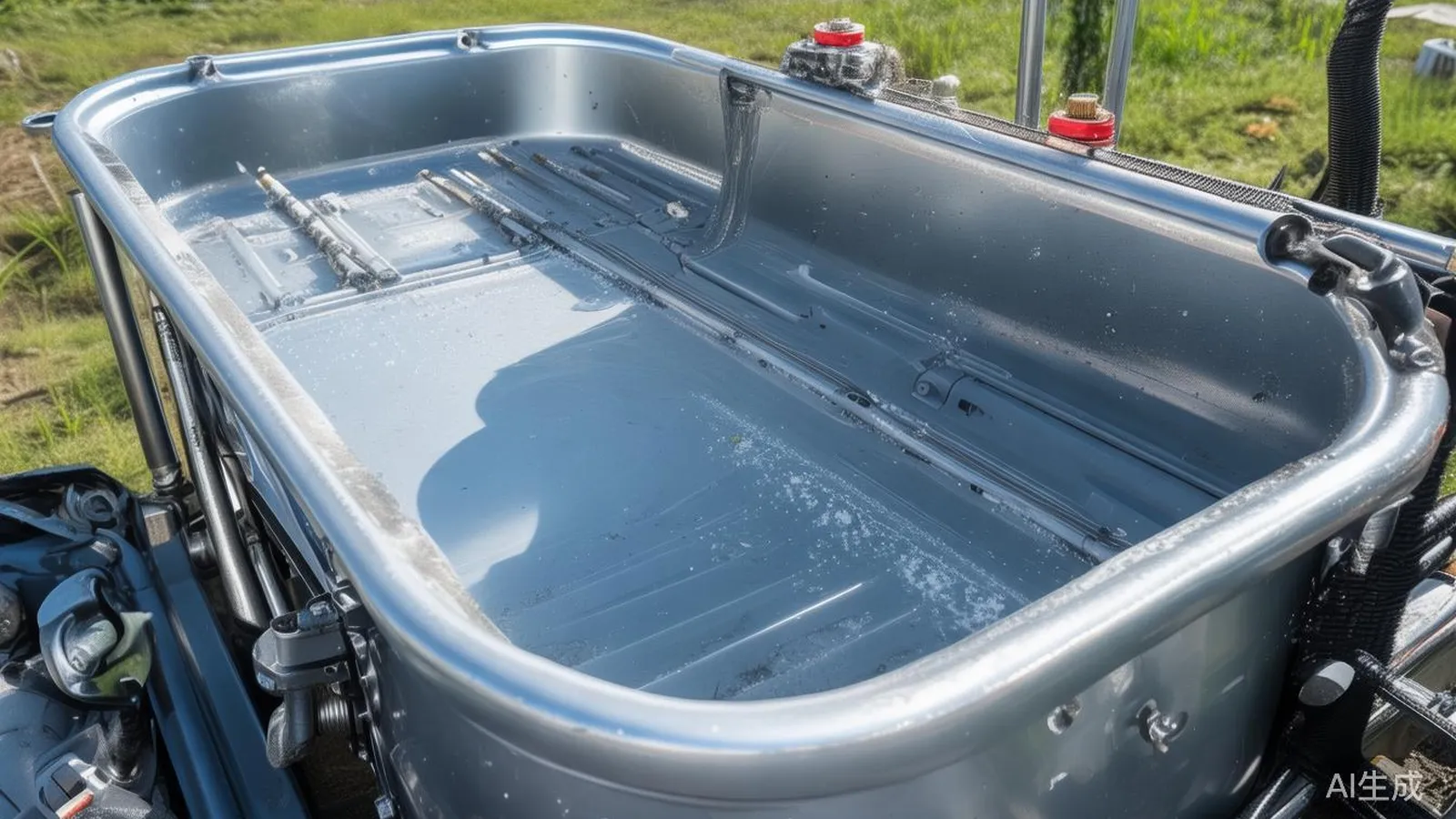
How to Size a Sprayer Tank for Agitation, Calibration, and Cleanout
Tank volume sets acres per fill, agitation flow keeps a wettable powder in suspension, and sump design plus a triple rinse decide whether the next chemistry starts clean. This guide sizes all three for farm, spot, and pull-behind rigs.
Oct 2, 2026
How to Select Spot Sprayer Nozzles for Accurate Band Treatment
Spot sprayer nozzle selection comes down to one carrier-volume equation, one orifice equation, and one calibration pass. This guide sizes the tip, the pump duty, and the drift limits for 15 to 25 gallon band and spot rigs.
Oct 1, 2026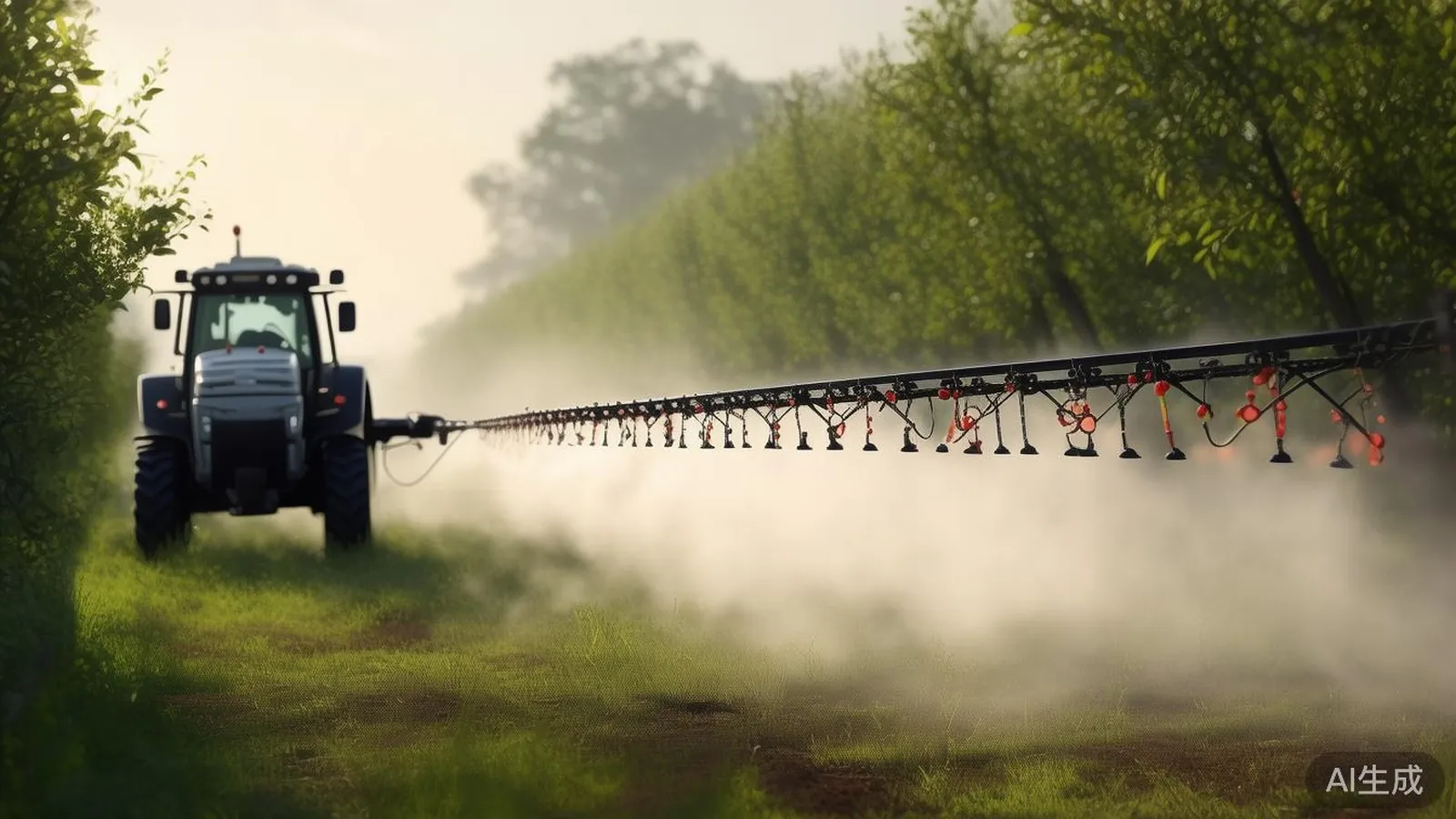
How to Match Mist Blower Nozzles to Droplet Band, Throw and Dose Rate
A mist blower sprayer only works when droplet band, throw distance and dose rate agree. This guide sets air-sheared drops at 30 to 120 µm, air to liquid ratio at 1:1 to 5:1, and coverage at 15 to 20 percent on water sensitive paper, then calibrates flow per nozzle to the target dose.
Sep 30, 2026
How to Spec a Spray Lance or Injection Quill for Vessel and Duct Duty
Size a spray lance or chemical injection quill by duty: 150 to 300 mm below the liquid surface inside a vessel, 0.34 to 0.56 m of penetration in a 400 C duct. Covers orifice flow, check valve cracking pressure, material limits and replacement triggers.
Sep 30, 2026
Fire Skid Unit Selection: Sizing Mobile Wildland Water Systems
A fire skid unit is a pump, tank, hose, and nozzle chain, and it is sized on three numbers: flow at pressure, tank volume divided by that flow, and pressure left at the tip after friction loss. This guide walks the chain from drive choice to acceptance testing, with the arithmetic worked out and verified.
Sep 29, 2026
Nozzle Cleaning and Unclogging: Diagnostics, Soaks and Maintenance Intervals
A blocked or worn spray nozzle distorts pattern and shifts dose long before it stops flowing. This guide covers deposit classification, acid, alkaline and solvent soaks, ultrasonic settings, orifice wear math, flow verification against rated GPM and a documented maintenance interval.
Sep 29, 2026
Spray Bar and Manifold Layout: Balancing a Multi-Nozzle Bar
A spray bar is a hydraulic circuit, not a pipe rack. This guide works the feed geometry, velocity and friction numbers that keep the near tip and the far tip within a few percent of each other, and covers dead legs, shutdown drip, mounting tolerance, quick change bodies and material choice.
Sep 29, 2026
Foam Marker Calibration: Visible Tracks, Miss Strips and Overlap
Marker tracks fail through pressure loss and geometry, not electronics. A 1.2 mm orifice at 3 bar passes about 1.6 L/min, and 22 psi instead of 40 psi cuts flow 26 percent. Two heads at 3 bar need 0.65 m spacing for a 14 percent overlap.
Sep 28, 2026
Mist Sprayer Selection: Pump, Output, Droplet Band and Duty Cycle
A mist sprayer is specified by duty level, not by nozzle count. Match the droplet band to the task, size the pump from the orifice equation Q about 0.65 d squared root P, and hold the duty cycle inside the pump rating. Worked numbers for disinfection, dust suppression and evaporative cooling.
Sep 28, 2026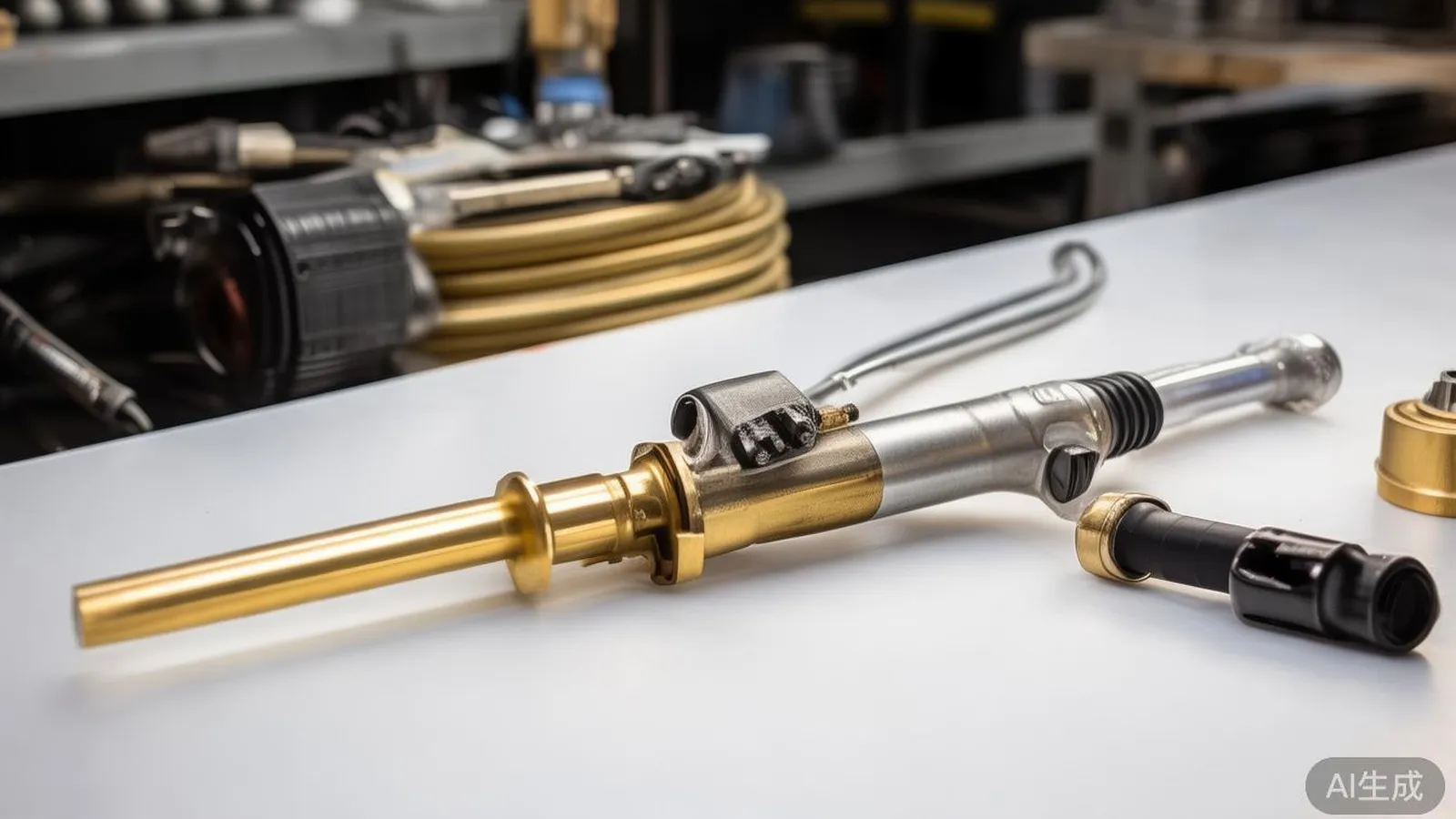
Spray Wand Selection: Matching the Lance to Pump, Pattern and Hand
Spray wand selection comes down to three numbers: litres per minute at the tip, bar left after hose and lance losses, and the reaction force the hand absorbs. A 1.2 mm tip passes 2.96 L/min at 10 bar, a 6 mm bore costs 5.6 bar of a 15 bar pump over 10 m, and a 1.2 mm tip at 40 bar pushes 9 N back into the wrist.
Sep 28, 2026
An Acres Per Hour Calculator Only Matters If the Nozzles Keep Up
A 60 ft boom at 6 mph has a theoretical field capacity of 43.6 acres per hour, but real work lands between 30 and 37. Here is the calibration math that holds 15 gallons per acre at 10.9 gpm and 0.303 gpm per nozzle.
Sep 27, 2026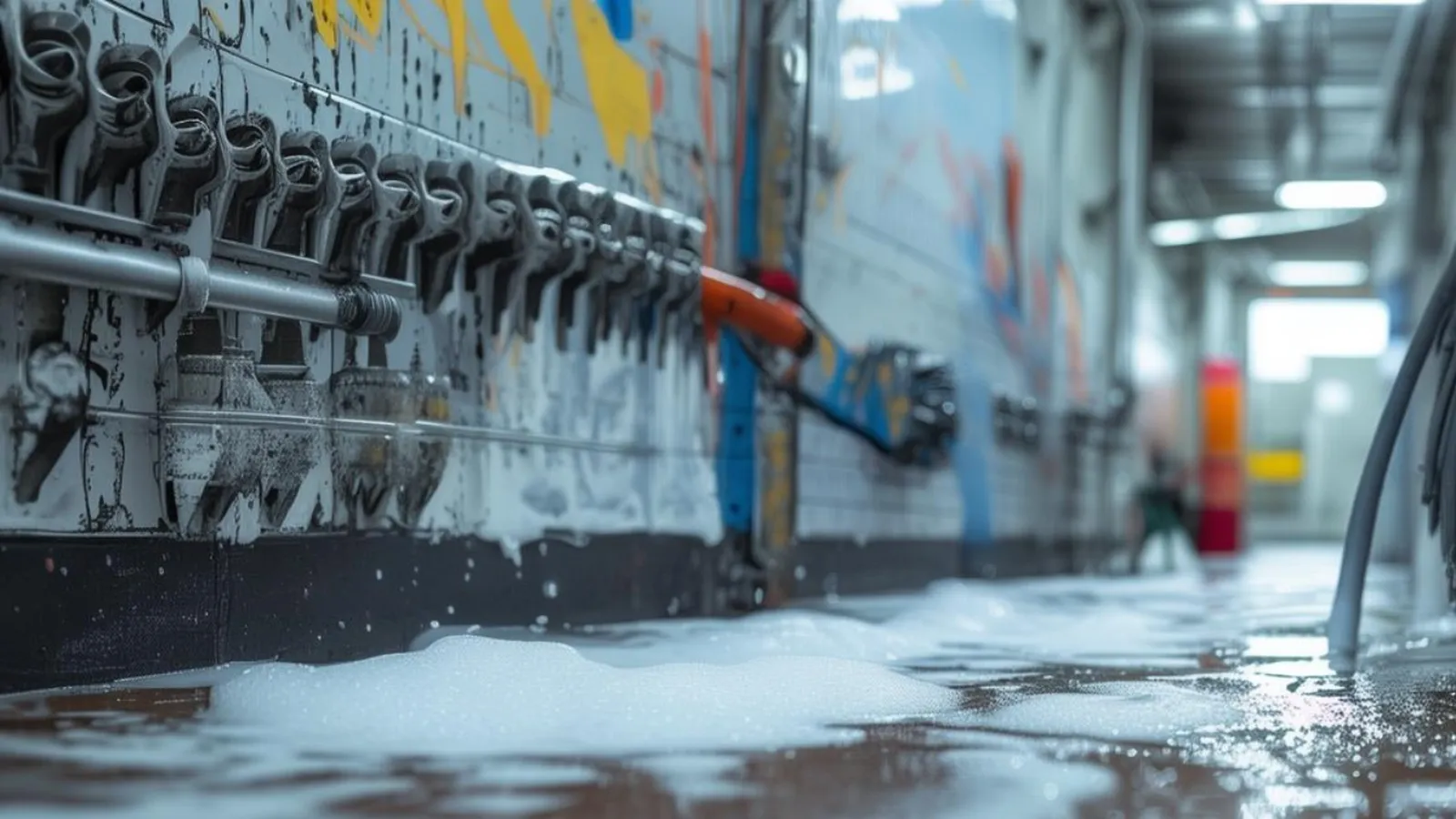
Car Wash Nozzles Do Two Different Jobs, and Most Bays Buy for Only One
A car wash runs two pressure classes: 20 to 60 psi for pre-soak, detergent, wax, and rinse aids, and 800 to 1500 psi for soil removal by force. Sizing both from one tip mists the chemistry and starves the pump, because the orifice number follows the pump's GPM rather than the duty.
Sep 27, 2026
Your 3 Point Sprayer Underperforms Where the Boom Meets the Nozzle
A 30 ft boom at 20 in nozzle spacing carries 18 tips and needs 0.2525 gpm (0.96 L/min) per tip for 15 GPA at 5 mph. This guide sizes the whole package: flow arithmetic, nozzle spacing against boom height, a flat fan tip against air induction, header plumbing, hitch geometry and calibration.
Sep 27, 2026
Greenhouse Fogging System Nozzles: Droplets, Pressure, Layout
Fully evaporating 100 L/h of fog removes about 62.8 kW, so a 1,000 m2 house needing 200 kW requires roughly 400 L/h of supply at 80% utilization. Droplets below 50 micron evaporate before contact; above 100 micron they wet foliage and raise disease pressure.
Sep 26, 2026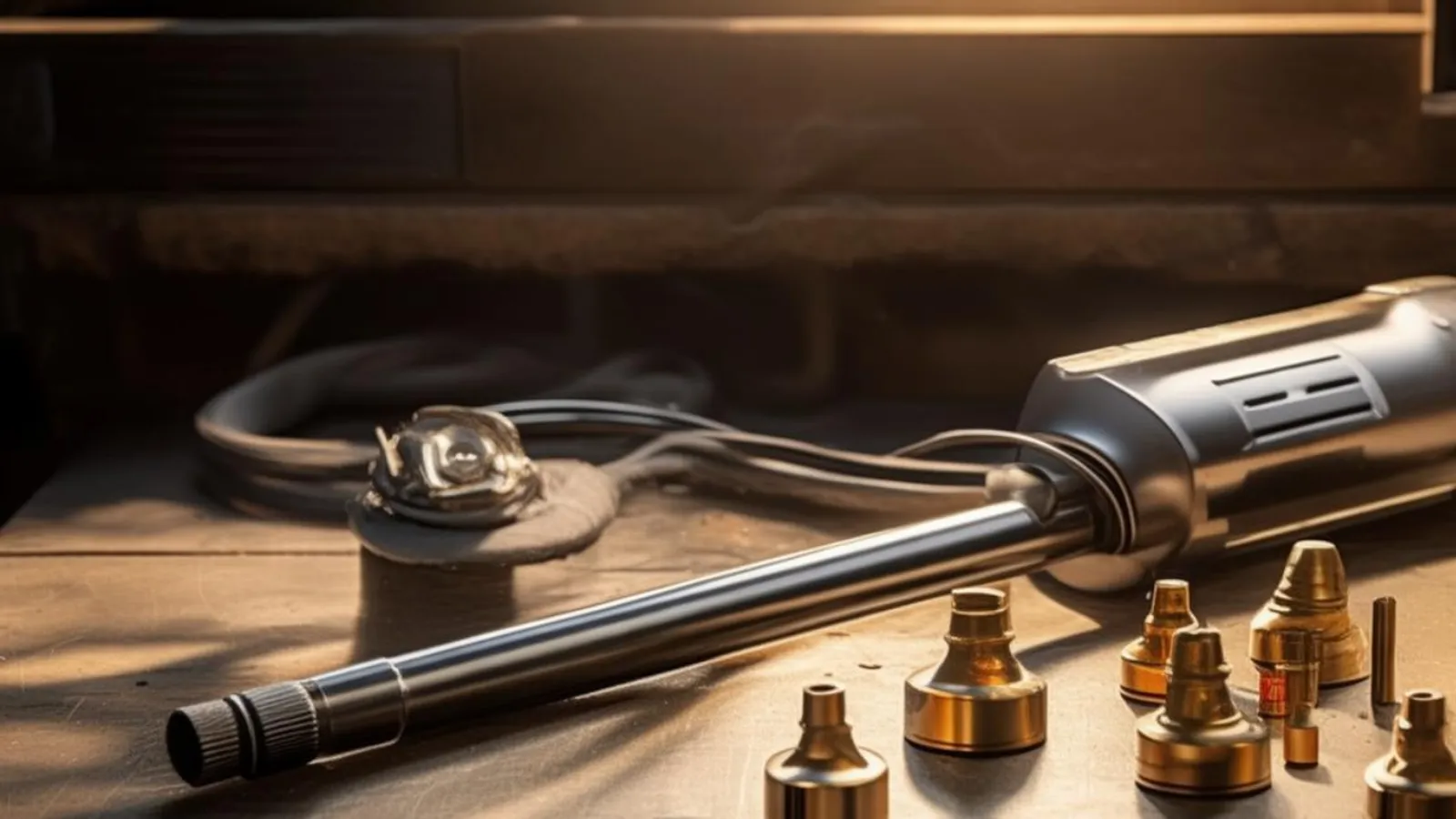
Pump Sprayer Nozzle Selection: Flow, Drift, Wear
Handheld pump sprayer nozzles work between roughly 20 and 60 psi, and flow scales with the square root of pressure. A tip worn 10 percent over its rated flow raises the application rate 10 percent while shrinking droplets, which is how drift complaints start on sprayers that cost less than one tank of chemical.
Sep 26, 2026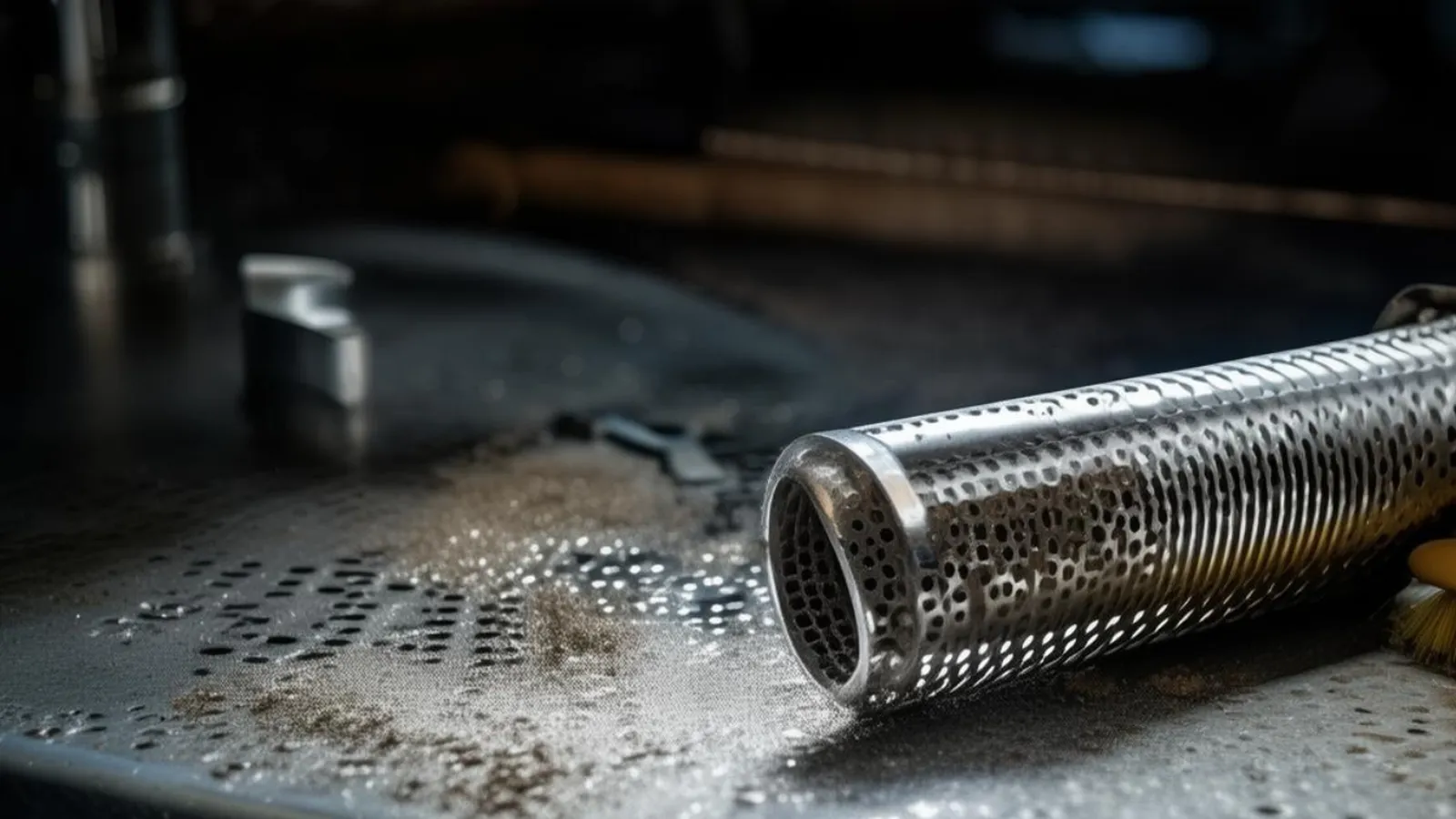
Strainer Mesh Size for Spray Nozzles: Stop Plugging at the Screen
Strainer mesh size should be set by the smallest nozzle free passage, typically at an opening no larger than half it. A 40 to 50 mesh screen protects a 0.07 in flat fan orifice; a 20 mesh pump screen will not. Clean screens run 1 to 3 psi drop; service them near 10 psi.
Sep 26, 2026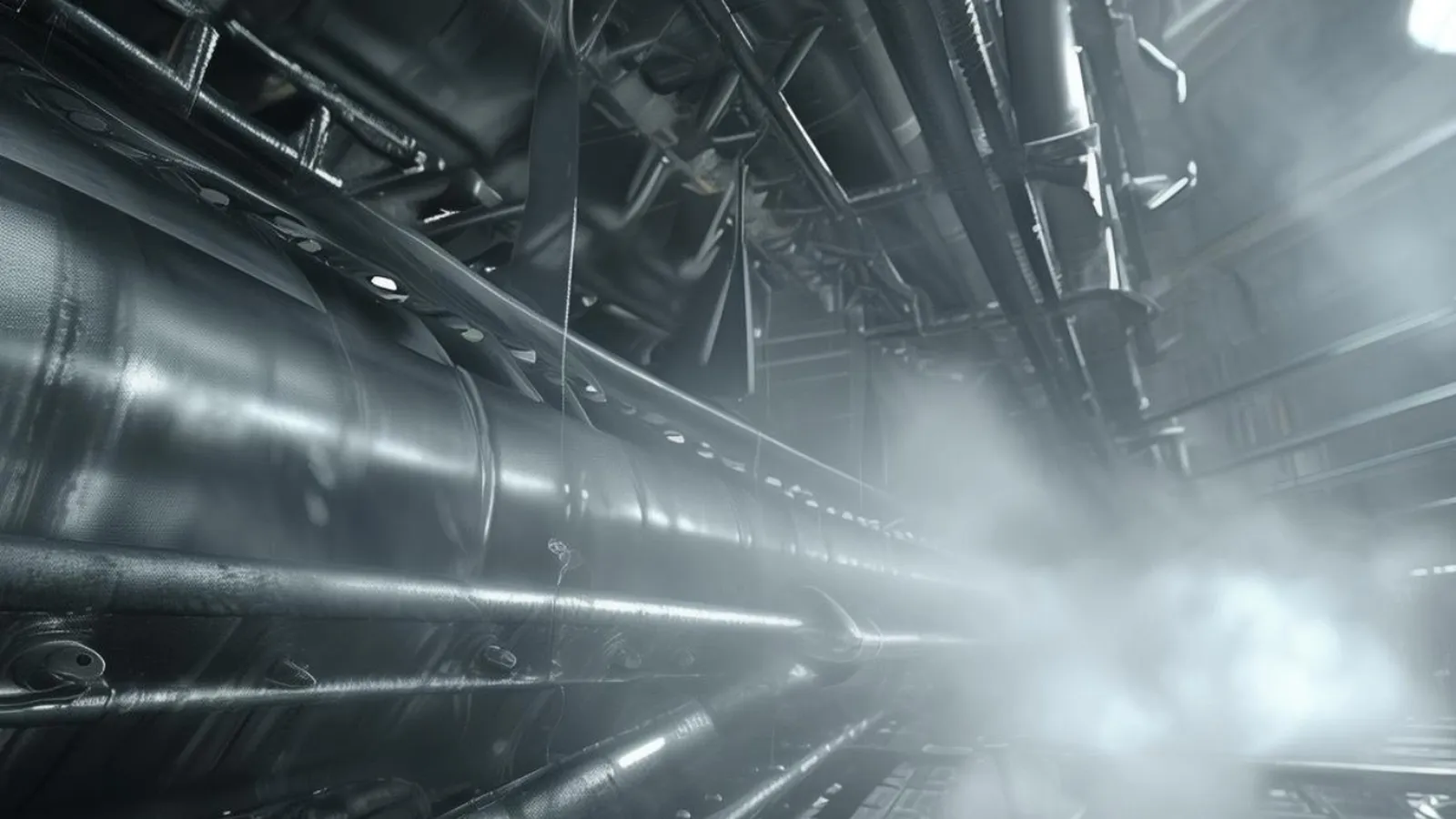
Duct Spray Cooling: How Many Meters to Full Evaporation
A duct spray cooler moves heat by evaporating water straight into hot gas. Cooling 10,000 m3/h of flue gas by 100 C needs about 260 kW and roughly 7 L/min of water. The nozzle then decides droplet lifetime, and lifetime times duct velocity decides evaporation distance. Fine 100 um drops vanish within 1-4 m; coarse 300 um drops need 10-30 m or they wet the walls. A 90-98% saturation approach is realistic, and the wet-bulb floor below it is not.
Sep 25, 2026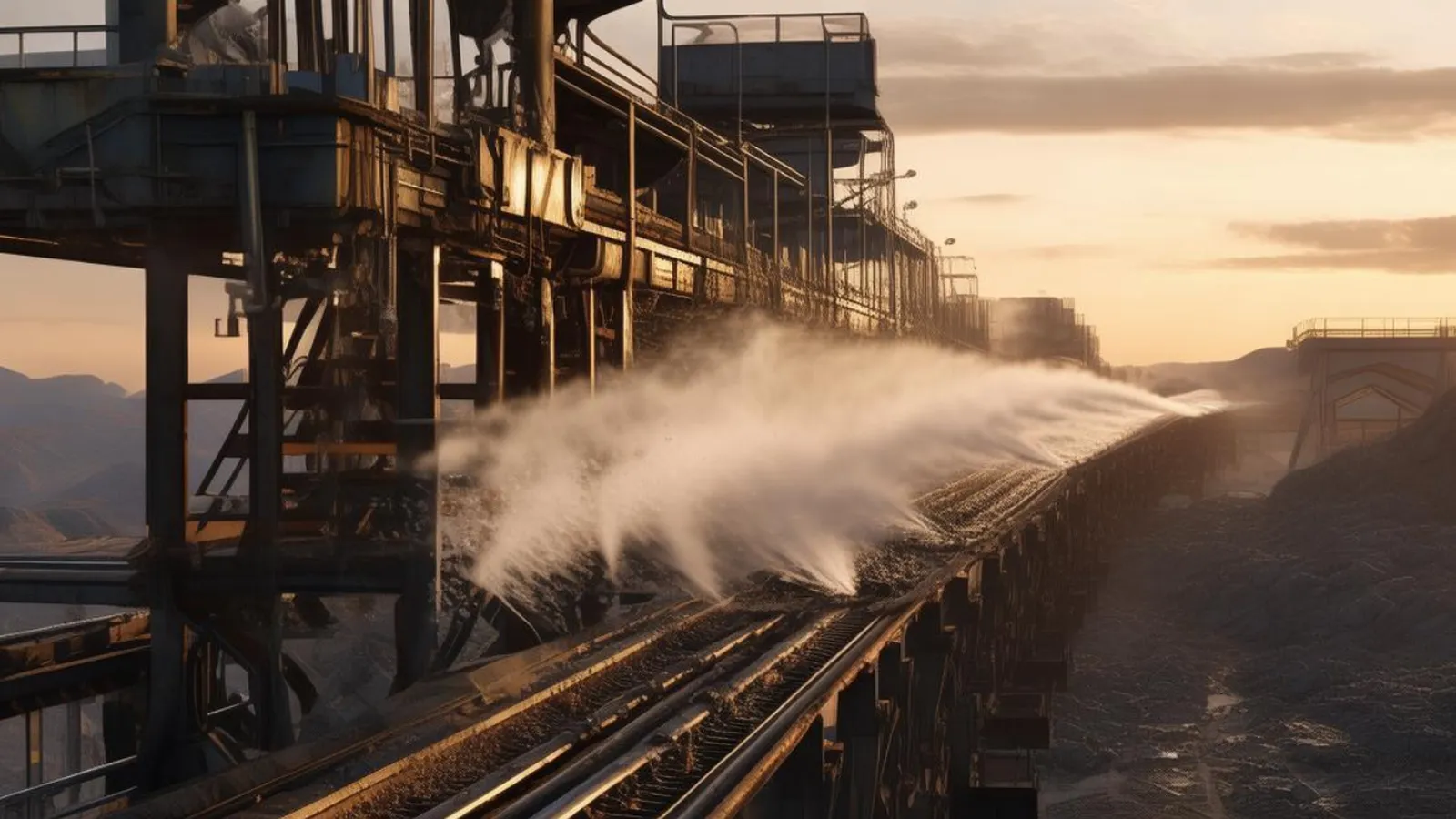
Mining Dust Suppression Nozzles: Sizing Spray Bars That Catch Respirable Dust
Most transfer-point spray bars miss the respirable fraction because the droplets are far too large. This guide matches droplet size to particle size, sizes spray bars at 2 to 4 nozzles per meter, and caps water dose at 0.5 to 1.0 percent of tonnage so belts keep traction. Worked numbers cover crusher outlets, belt transfers and longwall ancillary sprays.
Sep 25, 2026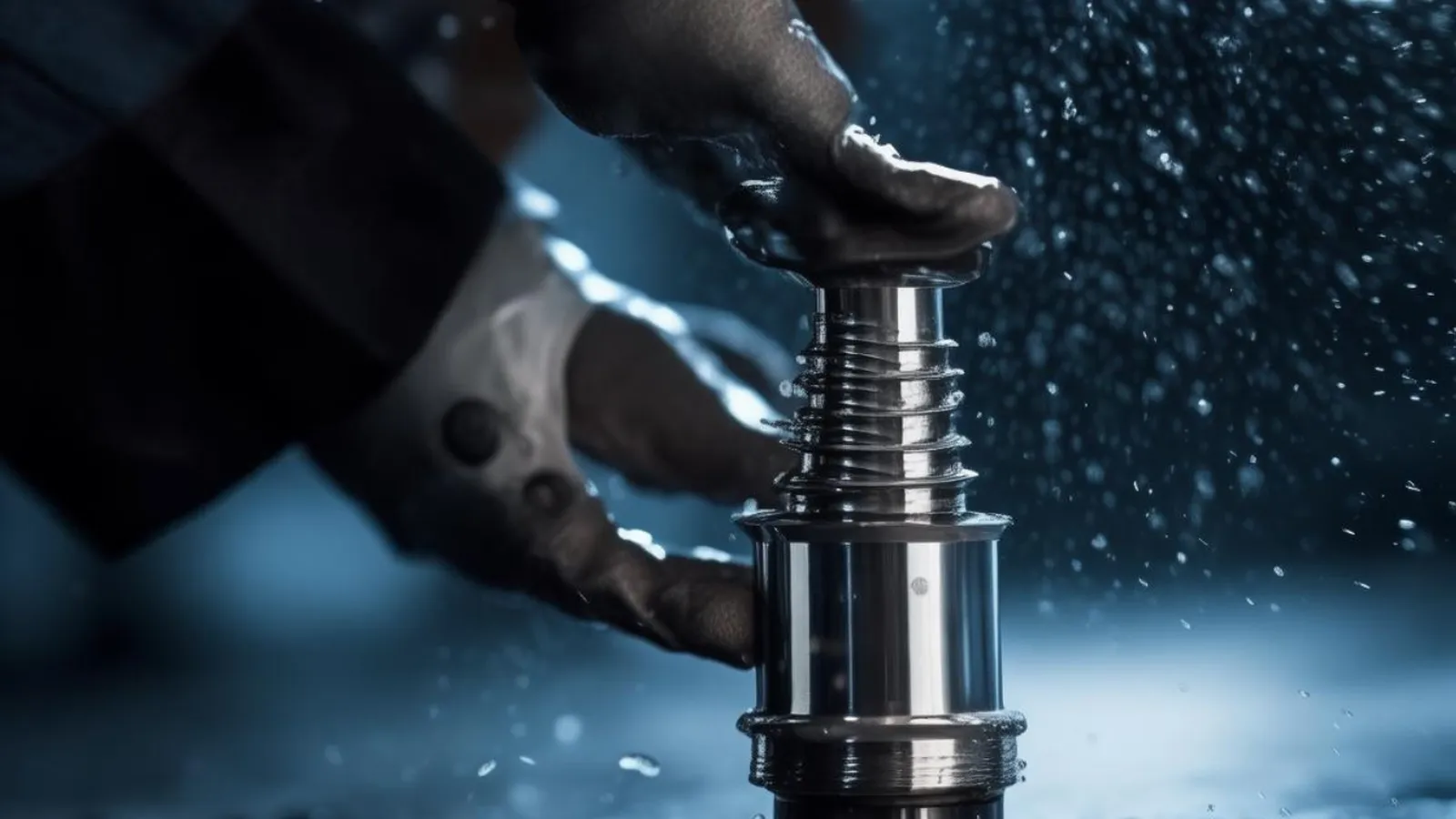
Pigtail Spray Nozzles: Clear the Clog Without Stopping the Spray
A pigtail spray nozzle clears its own orifice with a twisted wire while the spray stays live, so a scrubber header does not need a shutdown for one clog. The class typically runs 5 to 60 gpm at 40 to 150 psi in hollow cones of 60 to 120 degrees. Size the free passage to your actual debris with the pencil-through test, and confirm the wire thread matches the housing before you order.
Sep 25, 2026
Boom Sprayer Nozzle Set-Up: Spacing, Height, Angle and the Stripes You Miss
Set boom sprayer nozzles as one matched four-part spec: 110 degree flat fans, 1:1 overlap near 0.5 m boom height, rated pressure, and a three-step calibration inside 40 minutes. Nozzle wear beyond 10 percent rewrites the rate mid-season.
Sep 24, 2026
Spray Lubricant on Stamping and Rolling Lines: Cut Oil per Part
A stamping or rolling line holds a spray lubricant film of 0.5 to 3 g/m2, and a 1,250 mm strip at 60 m/min needs 90 g/min landed to reach 1.2 g/m2. This guide sizes viscosity, fan angle, overlap and transfer efficiency against oil per part.
Sep 24, 2026
Welding Fume Extraction Nozzles: Fix Capture Velocity, Distance, and Cross Draft
Most weld fume complaints are capture failures, not fan failures. This guide works through ACGIH capture velocity ranges, a 300 mm hood calculation at 1 m distance, the 0.5 m/s cross draft limit, and jet-induced nozzle rings that rebuild capture without oversized fans.
Sep 24, 2026
High-Pressure Water Nozzle Sizing: Orifice Diameter Against Pressure
Orifice diameter buys flow and total impact force, pressure buys velocity and intensity, and a fixed-flow pump makes the nozzle decide the pressure you get.
Sep 19, 2026
Why Hydroseeding Slurry Sprays Unevenly (and How to Fix It)
A fibre-laden slurry is not water, so slurry nozzle geometry, flow, pump match and wear have to be worked from first principles and checked in the field.
Sep 19, 2026
Spray Tip Size Chart: How to Read Tip Codes Across Brands
A spray tip size chart only works inside the numbering system it was written for. This guide decodes the five main systems, converts flow between them, and sets the replacement trigger when a worn tip flow rises past 10 percent.
Sep 19, 2026
How to Match a Hose Nozzle to Your Pump, Not to the Trigger
Garden hose nozzles run 4 to 12 L/min on a healthy 12 to 20 mm supply line, and hose-end sprayers run 0.5 to 1.5 gpm. This guide works the friction loss a 15 to 30 m hose takes out of the supply, then matches trigger gun, pattern, orifice and seal material to the duty. It closes with the five faults an operator can fix in ten minutes.
Sep 17, 2026
How to Size MQL Nozzles: Droplet Diameter, Not Flow Rate
A minimum quantity lubrication nozzle meters roughly 50 mL/h per point and breaks that oil into 20 to 50 micron droplets, so droplet diameter and air setting decide the result, not flow rate. This guide works external mix valving, the 30 degree fluid angle, the 32 to 68 cSt window and the placement per operation. It also sets MQL against flood, metered air-oil and dry machining with numbers.
Sep 17, 2026
How an Air Oil Lubrication System Meters Oil by Slug, Not the Flood
A metered air-oil system delivers 0.01 to 0.05 mL per outlet per cycle. This guide works the piston arithmetic, cycle intervals, ISO VG grade choice, tube velocity bands and the annual oil and air cost for ways and spindle bearings.
Sep 15, 2026
Fountain Nozzle Spray Patterns: Designing a Fountain That Holds Up
Fountain pattern shapes are set by nozzle family, pressure at the nozzle and basin geometry, not by the pump nameplate. Height follows the square root of pressure, so doubling bar does not double throw. Wind, filtration and turnover decide whether the pattern still reads in season three, and each of these is arithmetic you can do before you buy a nozzle.
Sep 14, 2026
Air Knife vs Air Nozzle: Which Blow-Off Dries Faster on Less Air
An air knife and an air nozzle move the same compressed air by opposite physics: a wide entrained sheet against a concentrated jet. This guide works the momentum at 60 and 100 m/s, the annual air cost, the 300 mm band arithmetic and the 85 dBA noise line.
Sep 13, 2026
ATV, UTV, 3-Point and Tow-Behind Sprayer Nozzle Setup
A 6 m ATV sprayer boom at 100 L/ha and 12 km/h needs 12.0 L/min, which is 1.0 L/min per tip at 0.5 m spacing. This guide works the flow method, the square root pressure law, the width and overlap geometry and a clean water calibration for ATV, UTV, 3 point and tow behind sprayer nozzles.
Sep 13, 2026
Chemical Injection and Inline Mixing: Nozzle and Eductor Selection for ppm Accuracy
Dosing accuracy is set by arithmetic before it is set by hardware. This guide works the ppm to litres-per-hour conversion, compares venturi suction, static mixing and quill injection, and covers injection point geometry, suction ratio, turndown, materials and tracer verification on a 50 m³/h line.
Sep 13, 2026
Lithium Battery Electrolyte Tank Cleaning: Why Standard CIP Falls Short
Standard CIP uses water as its carrier, and water is the contaminant an electrolyte tank has to remove. This guide covers the LiPF6 hydrolysis route, the 20 ppm moisture spec, the rinse-flow arithmetic for a 60 m2 vessel, and the NMP recovery loop that keeps the tank dry.
Sep 13, 2026
Reactor Cleaning Nozzles: Tank Cleaning Cycles for Polymer and Pharma Reactors
A 100 m² reactor at 20 L/h per m² needs 33.3 L/min across its nozzle set and a 60 minute wash. This guide works the impingement threshold, the spray ball versus rotary spray head choice, the full cycle arithmetic with heat and drain, and the TOC, conductivity and riboflavin evidence a polymer or pharma reactor cleaning cycle needs to pass first time.
Sep 13, 2026
How to Set Up a Boomless Spray Nozzle Cluster Without Stripes or Drift
Boomless clusters trade evenness for access, so the setup work is geometry, overlap and droplet class. This guide works the width law, the L/ha arithmetic, the mounting and levelling checks and a catch-can calibration for a boomless agricultural swath.
Sep 12, 2026
Why Your Oil Burner Soots Up Even With a New Nozzle
A symptom-led diagnostic route for oil burner nozzle faults, from a pressure and flow check through ignition, pump and draft readings. Each symptom maps to a cause and a corrective action with the numbers to confirm it.
Sep 12, 2026
How to Source Custom Plastic Spray Nozzles Without Tooling Rework
A buyer-side method for sourcing custom plastic spray nozzles, covering the molded versus machined break-even, orifice tolerance against flow, the incoming flow-bench test, material traceability and a three-year cost view.
Sep 12, 2026
Bottling Line Spray Nozzles: Fixing Rinse Gaps, Dry Conveyors and CIP Blind Spots
A station by station guide to bottling line spray systems. It covers rinse coverage, conveyor lubrication film, sanitizer spray, CIP blind spots and air dry-off. Each section gives the flow, pressure, angle and overlap numbers that hold the duty in control.
Sep 11, 2026
Solid Stream Nozzles: Where Impact Beats Coverage
Solid stream nozzles trade pattern width for impact, so they win wherever the goal is a force on a target rather than wetted area. This guide covers the impact physics, the duty ladder for pressure and orifice, standoff decay, wear thresholds, filtration and the two-stage layouts that break scale before a fan pattern rinses it.
Sep 11, 2026
Why Your Paper Machine Wet-End Shower Streaks, Plugs and Wastes Water
Wet-end shower faults are usually hydraulic sizing or placement errors, not nozzle defects. This guide covers pressure bands, orifice sizing, overlap and oscillation for every shower position on the wire and felt.
Sep 10, 2026
How Do I Select a Spray Nozzle? The Duty-Led Spray Nozzle Selection Guide
A duty-led map for specifying an industrial spray nozzle, organised by nozzle family with the flow, pressure, droplet and material numbers that decide the choice. It links out to the deep cluster guides and the product ranges.
Sep 10, 2026
Cleaning Cone-Bottom Tanks: Why the Sloped Wall and the Sediment Ring Fail Standard Spray Patterns
Cone bottom tank cleaning fails when top mounted patterns sized for the straight shell never reach the sloped cone wall, the cone-to-cylinder seam and the discharge pocket. Covers cone angles and wall length, poly tank cone bottom limits, nozzle placement and reach classes, and a worked rotary jet head sizing example.
Sep 7, 2026
Air-Blast Orchard Sprayers: Setting Up Nozzles, Air Volume and Calibration So Coverage Actually Reaches the Canopy
Orchard air blast towers fail when spray stops at the leaf wall and the tree interior stays dry. This guide explains how air volume and air speed carry droplets, which nozzle families suit a tower, how droplet size drives drift, and the calibration math that sizes flow to row spacing, plus the checks that keep a setup honest.
Sep 7, 2026
Backpack Sprayer Nozzle Selection: What Actually Changes Coverage
Backpack sprayer nozzle selection decides coverage more than the pump does. Match flow to the wand output, pick flat fan or cone by the job, keep the droplet class in the label window, and let an anti-drip valve stop the streaks between strokes.
Sep 1, 2026
How to Choose Air Nozzles for Air Compressors: Flow, Force and Noise
An air nozzle for air compressor blow-off only earns its place if it fits the compressor that feeds it. This guide matches nozzle flow, force and noise to the machine you actually own, with SCFM math, amplification ratios, OSHA noise limits, material and food-contact rules, and a selection table you can print.
Aug 30, 2026
Brass Spray Nozzles: Grades, Applications and Limits
Brass nozzles win on price, machinability and thermal conductivity, but only inside a narrow window: pH 6-9 water, low chloride, no ammonia, and pressure under roughly 20 bar. Match the grade to the fluid.
Aug 30, 2026
CIP Tank Washing Systems: Nozzles, Cycles and Validation
How to spec a CIP system: five cycle phases, static spray ball vs rotary jet head, flow and coverage math, chemistry windows, 3-A design and validation.
Aug 30, 2026
Fire Protection Nozzles: Types, Flow Rates and Selection
Fire protection nozzles are selected on three numbers: flow at pressure, pattern, and reach. This guide compares solid stream, fog, combination, and high-pressure mist designs against published fire-service flow data, then walks materials, inspection, and a selection checklist.
Aug 30, 2026
Fogging Nozzles for Livestock Cooling: Systems and Selection
Heat stress costs livestock producers over a billion dollars a year. Fogging nozzles cool barns by evaporating fine water droplets, and the system that works depends on pressure, droplet size, water quality and layout. This guide covers THI thresholds, high pressure vs low pressure systems, nozzle selection, spacing, maintenance and a selection checklist.
Aug 30, 2026
Full Cone vs Hollow Cone Nozzles: Which Spray Pattern Fits Your Duty
Full cone fills the whole circle; hollow cone sprays a ring. The choice is a physics match: cooling, rinsing and dust knockdown want center coverage, while humidification, scrubbing and evaporative cooling want fine edge droplets.
Aug 30, 2026
How to Select Nozzles for Pull-Behind and Tow-Behind Sprayers
Size every nozzle on a pull-behind or tow-behind sprayer boom with one formula, one color chart, and one 20-minute calibration: GPM, angle, spacing, drift rules, and the common mistakes to avoid.
Aug 30, 2026
Rotary Jet Heads for Tank Cleaning: Coverage, Flow and Cycle Time
Rotary jet heads clean tanks from 3 m to 13.7 m diameter by concentrating flow into slow-sweeping high-impact jets. This guide covers the fluid-driven working principle, 360° coverage geometry, the N = Q·t/V cleaning time relation, the 10-150 L/min flow window at 3-15 bar, sanitary design, and maintenance.
Aug 30, 2026
Types of Spray Nozzles: Nozzle Selection Guide by Pattern
Six nozzle types cover almost every industrial spray duty: flat fan, full cone, hollow cone, solid stream, spiral and air atomizing. Each has a fixed spray pattern, a droplet class and a flow law. Match the type to the surface, the material to the fluid and the size to the pressure.
Aug 30, 2026
Water Eductors: How They Work, How to Size One
Water eductors are no-moving-parts jet pumps: a pressurized water jet creates suction that entrains 2-5x its own flow, lifting liquids, mixing tanks, dosing chemicals and pulling dust into viscous fluids.
Aug 30, 2026
How to Choose Drone Spraying Nozzles for Even Coverage
How to pick drone spraying nozzles that lay even coverage: system anatomy, flat fan vs rotary atomizer, flow and rate math, droplet class, boom setup, and calibration procedure for aerial application.
Aug 28, 2026
How to Specify Electrostatic Spraying: Transfer Efficiency, Cost, and Verification
A specification guide for electrostatic spraying: how charging works, published transfer efficiency by method, voltage and resistivity windows, line verification tests, cost math, safety, and the questions to ask an electrostatic spraying company.
Aug 28, 2026
How to Choose a Hose Nozzle: Pattern, Flow, Fitting and Material Decisions
Hose nozzle selection comes down to duty, pressure, flow, pattern, fitting, and material. This guide covers the flow formula, pressure ranges, thread standards, and wear data an engineer needs before buying.
Aug 28, 2026
How to Read a TeeJet Nozzle Chart: Decoding the Numbering System
Decode every part of a TeeJet nozzle code. Use flow, pressure, spacing, and droplet tables to size sprayer nozzles for herbicide, insecticide, and fungicide work.
Aug 28, 2026
Water Spray Nozzle Design Calculation: Flow, Angle, and Coverage
Size an industrial water spray line in order: duty, pressure, K factor, spray angle, overlap, spacing, pipe, and droplet size. Worked examples cover a product cooling line and a dust suppression transfer point.
Aug 28, 2026
How to Choose an Air Nozzle: Blow-Off, Drying and Cooling Without Wasting Compressed Air
Choosing an air nozzle means trading brute-force compressed air for shaped, amplified flow. This guide compares round, flat, knife and atomizing designs against real flow and noise data from EXAIR, Spraying Systems and Lechler, then walks the five-step selection method that keeps blow-off cost and noise down.
Aug 25, 2026
Airless Paint Spraying: Pressure, Tip Size and Technique That Decide the Finish
Airless paint spraying atomizes coating with hydraulic pressure alone, no compressed air. The finish you get is decided by three things: pressure, tip selection (fan width + orifice) and technique. This guide explains the physics, the tip number system, how to set pressure, how to spray without runs or dry patches, what tip wear really costs, and the safety rules that are non-negotiable.
Aug 25, 2026
Eductor Selection: Sizing, Pressure, Materials, and the Pump Trade-Off
An eductor selection guide: when an eductor beats a pump, the five selection parameters (liquid flow, motive pressure, flow amplification ratio, materials, installation), a duty-based selection table, lifecycle cost versus mechanical pumps, and the mistakes that ruin otherwise sound specs.
Aug 25, 2026
Eductor Sizing Calculator: How to Match Pump Flow to Tank Turnover
A repeatable three-step eductor sizing calculator: fix the working tank volume, set the turnover target by duty (2-4 turnovers/hour for general agitation up to 20+ for critical cleaning), then back out pump flow with the 4:1-5:1 circulation multiplier. Includes worked examples, a 10 m³ tank with a 100 L/min pump gives 450 L/min of circulation and a 22-minute turnover, plus a turnover-time reference table and the mistakes that wreck most installations.
Aug 25, 2026
Eductor Not Mixing? Troubleshoot the System Before You Replace the Part
Most eductor failures are system problems wearing a part's face: pressure at the body, submergence, strainers and erosion. This guide maps the five classic failure modes, weak circulation, cavitation noise, low discharge pressure, clogging and wear, to their causes and fixes, covers the installation errors that look like breakdowns, and gives the maintenance and replace-vs-repair rules that keep a mixing loop running.
Aug 25, 2026
Nozzle Spray Angle: What 15°, 45°, 90° and 120° Actually Mean
Spray angle sets the width of the band or cone at a given distance. Narrow angles concentrate impact; wide angles spread coverage and cut pressure per area. Match the angle to the target width and standoff, not to a catalogue habit.
Aug 25, 2026
Paint Sprayer Tip Size Chart: Read the Code Before You Spray
A paint sprayer tip size chart decodes the three-digit tip number into fan width and orifice size. Match both to your coating and pump before you spray.
Aug 25, 2026
Pressure Washer Nozzle Chart: Color Codes, Flow Rates, and the Right Tip for Every Job
A pressure washer nozzle chart maps color to spray angle and orifice size to flow. Match the tip to the task or the pump pays: color codes, GPM tables, and the seven mistakes that wreck surfaces and pumps.
Aug 25, 2026
How to Design a Work Roll Cooling Header: Flat Fan Nozzles, Flow Density and Spray Angle
Flat fan nozzles are the preferred pattern for work roll cooling because their elongated footprint and parabolic liquid distribution cover a roll barrel evenly. This guide covers flow density in L/min per metre of barrel, spray angle and offset angle selection, header row layout, overlap, water filtration and maintenance, with real mill flow and pressure ranges from hot and cold rolling practice.
Aug 25, 2026
Secondary Cooling Nozzles: Continuous Casting Design and Selection
Secondary cooling nozzles for continuous casting: spray zone layout, air-mist versus water-only, specific water flow and the uniformity rules that prevent defects.
Aug 25, 2026
Strip Cooling Nozzles 2026: Laminar vs Air-Mist Compared
Hot-rolled strip is water-cooled twice: in the laminar cooling system on the run-out table behind the finishing mill, and in the secondary cooling zone of the continuous caster. Both are arrays of strip cooling nozzles fighting the same physics, vapour-film boiling, width non-uniformity, phase transformation, but they are engineered completely differently: gravity-fed laminar columns on a fast-moving strip versus pressurized plain-water and air-mist sprays on a slow strand. This guide compares structure, water allocation, width uniformity, flat fan layout and overlap, and cooling rate control, with published cooling rates, water flows and temperature-uniformity numbers throughout.
Aug 25, 2026
Strip Cooling Troubleshooting: Why the Coil Cools Uneven and What to Check First
Strip cooling defects announce themselves before they scrap a coil: transverse temperature spread, edge overcooling, sagging header pressure, clogged tips or worn orifices. This guide maps each symptom to its root cause and fix, then gives a field inspection procedure and a maintenance plan that stops the next coil from being the one that fails.
Aug 25, 2026
Ultrasonic Atomizing Nozzle: Droplet Size You Can Calculate Before You Spray
An ultrasonic atomizing nozzle vibrates liquid into 10–50 µm droplets with a piezoelectric transducer at 1–8 W, no compressed air, no small orifices, no moving parts. Resonant frequency sets droplet size by math you can check before buying. It wins at thin-film coating and low flow; air atomizing still wins at litres per hour.
Aug 25, 2026
Ultrasonic Misting Evaporative Cooling: Droplet Physics, Applications and the Energy Trade-Off
Ultrasonic misting evaporative cooling uses piezo transducers to make 1–5 µm droplets that evaporate in milliseconds, pulling heat out of the air at 2.26 MJ per liter of water. It trades higher energy per liter against simpler hardware, no high-pressure pump, no stainless piping, which decides where it wins: small zones, dry climates and retrofit jobs, not megawatt-scale loads.
Aug 25, 2026
Ultrasonic Humidification Nozzles: Why Your Warehouse Stalls at 30% RH
Ultrasonic humidification nozzles atomise water with a piezo disc into 1–5 µm mist, sized to room volume, target RH and ventilation load. This guide covers the physics, the humidification load calculation, the high-pressure misting comparison, and installation and maintenance.
Aug 25, 2026
Atomizer Guide 2026: Types, Droplet Size, How to Choose
An atomizer turns liquid into a spray of droplets. Hydraulic, air-assisted, ultrasonic and rotary types compared on droplet size, flow, energy and duty fit.
Aug 25, 2026
The Eductor Principle: How a Small Jet Moves Five Times Its Own Volume
An eductor is a no-moving-parts jet pump: a high-velocity motive stream creates a low-pressure zone that entrains several times its own flow, turning a small pump into a large circulator.
Aug 25, 2026
Cooling Nozzles for Industrial Process Cooling: Types and Selection
Cooling nozzles remove heat three ways: sensible heating of water, evaporation of fine mist, and direct impingement on hot surfaces. This guide maps the seven main industrial cooling scenarios to the right nozzle family, full cone, hollow cone, flat fan, spiral or air atomizing, with real flow, spray angle and drop size ranges for each.
Aug 21, 2026
Tank Cleaning Nozzles: How to Choose and Size Them
Tank cleaning nozzle selection starts with tank diameter and soil type: static spray balls and rotating heads under 3 m, rotary jet heads to 6 m, machine-class and high-pressure heads beyond. Flow, pressure, impact and cleaning-time tables plus a six-step sizing walkthrough.
Aug 21, 2026
Industrial Spray Nozzles 2026: Pattern, Material, Sizing
Industrial spray nozzles are specified by duty, not catalogue number. Pattern, material and flow must match the process, and the numbers that decide it are simple but unforgiving.
Aug 18, 2026
Agricultural Herbicide Spray Nozzles: Spec for Drift Control Without Losing Coverage
How to spec herbicide nozzles: ASABE S572 droplet classes, flat fan and air-induction behaviour, the 2–4 bar pressure band, and the coverage-versus-drift tradeoff in numbers.
Aug 17, 2026
Agricultural Sprayer Nozzle Types and When to Use Each
How the three main agricultural sprayer nozzle types behave, and the application each one suits best across the season.
Aug 17, 2026
Agricultural Nozzles: Drift, Droplet Size and the Sprayer Setup
An agricultural spray nozzle puts chemical on the crop, not in the wind. Droplet size is the drift lever: fine drops drift, coarse drops land. Flat fans for bands, cones for canopy, air-induction for drift control. Match the boom setup to the droplet, not the other way.
Aug 17, 2026
Air Atomizing Nozzles: Internal vs External Mix, Droplet Size and Air Cost
An air atomizing nozzle uses compressed air to shear liquid into 10–80 µm droplets with tight control. Internal mix for thin fluids, external for viscous; the air cost is the trade against hydraulic spraying. Pick it when droplet size decides the outcome: coating, humidification, dosing.
Aug 17, 2026
Atomization Nozzles: Pressure, Air-Assist and Ultrasonic Compared
Three ways to atomize, pressure, air-assist and ultrasonic, each with a droplet size range and a cost. Match the method to the droplet size the process actually needs, not to habit.
Aug 17, 2026
Droplet Size Calculation: Sauter Mean Diameter, Droplet Class and How to Size for Your Result
Droplet size is the result you are buying, not a side effect. This guide explains how droplet size is expressed (SMD, VMD), the ASABE drift classes, the levers that change it (pressure, orifice, air assist), the Weber and Ohnesorge numbers behind breakup, and how to turn a required drop into a nozzle spec, with worked examples.
Aug 17, 2026
Dust Suppression Nozzles: How to Wet a Pile Without Wasting Water
Dust suppression is about laying an even coarse spray on a pile or belt, not drenching it. This guide covers the pattern (wide-angle full cone), the droplet class (coarse, low drift), the pressure (low, to avoid bouncing off), and how to size nozzles for mines, sites, conveyors and plants, with worked examples.
Aug 17, 2026
Flat Fan Nozzles: Angle, Coverage and the Even-Strip Problem
A flat fan nozzle turns liquid into a thin, even band, the workhorse for spraying strips, surfaces and sheets. The spray angle sets the band width, the orifice sets the flow, and the header layout decides whether the strip is uniform or heavy in the middle.
Aug 17, 2026
Flat Fan vs Full Cone: Which Spray Pattern for Your Job
Flat fan makes a band for flat surfaces; full cone makes an even round patch for volumes. The choice is the target geometry: flat surface → fan, volume or round area → cone. This guide compares them on coverage, evenness, impact and clogging.
Aug 17, 2026
How to Choose a Spray Nozzle: The 7-Step Selection Framework
Choose a spray nozzle in 7 steps: pattern (what shape to cover), flow (Q=K√P), pressure, droplet size, material (fluid chemistry), thread (BSP/NPT), and supplier. Nail the first three and the rest follows.
Aug 17, 2026
Industrial Water Spray Nozzles 2026: Patterns, Flow, Duty
Industrial water spray nozzles are chosen by pattern and duty, not by brand. This guide compares full-cone, hollow-cone, flat-fan and misting nozzles for cooling, dust control, washing and humidification, with real flow and droplet ranges.
Aug 17, 2026
Jet Nozzles: Solid Stream, Flat Fan and Multi-Jet, Picking the Right Shape for the Duty
A jet nozzle shapes water into a defined jet: solid stream, flat fan or a row of smaller jets. The solid stream throws furthest with the most impact; the flat-fan jet covers a strip evenly; the multi-jet spreads force across a block. Picking the right jet shape is the difference between flushing a line and missing half of it.
Aug 17, 2026
Manufacturing Spray Nozzles 2026: Specs That Cut Downtime
Manufacturing lines lose efficiency through nozzles that fail quietly, clogged orifices, wear drift and wrong angles, so a nozzle spec and inspection cadence prevent most downtime.
Aug 17, 2026
Misting Nozzles: Droplet Size, Coverage and the Line Between Fog and Spray
A misting nozzle makes droplets small enough to stay suspended and evaporate: 10–100 µm, not a spray. The job is cooling, humidification or dust capture, and the failure mode is always the same: droplets too big, so they fall as drizzle instead of vanishing into the air.
Aug 17, 2026
Nozzle Thread Sizes: BSP vs NPT, G, M and How to Match the Fitting
BSP and NPT are the two nozzle threads that matter. BSP is parallel with a 55° angle; NPT is tapered at 60°. Measure the thread, not the hose, and never force a BSP into an NPT port.
Aug 17, 2026
Oil Burner Nozzles: GPH, Angle and Pattern for Clean Combustion
An oil burner nozzle atomises fuel oil into a pattern the burner ignites. Gallons-per-hour sets the fire size, spray angle sets the flame shape, hollow vs solid cone sets the air mix. Match all three to the burner or the flame soots, smokes and wastes fuel.
Aug 17, 2026
Plastic Nozzles: PP, PVDF and PTFE, When Metal Fails
A plastic nozzle (PP, PVDF, PTFE) survives corrosive chemistry that eats stainless, often at lower cost. PP to ~80°C for acids/alkalis, PVDF to ~140°C for oxidisers, PTFE to ~200°C for near-universal resistance. Pick by chemical class and temperature, not by habit.
Aug 17, 2026
Pressure Washer Nozzle Chart: How to Read It and Match the Tip to the Dirt
A pressure washer nozzle chart maps orifice size to pressure and flow. Read it right and match the fan angle to the dirt before you fit the tip.
Aug 17, 2026
Spiral Jet Nozzle Guide: Structure, Flow and Selection
A spiral jet nozzle turns a helical groove inside the body into a full or hollow cone of spray, delivering high flow at low pressure with a large free passage that resists clogging in dirty water.
Aug 17, 2026
Spiral Nozzles: Full Cone, Hollow Cone and Why They Don't Clog
A spiral nozzle makes a cone (full or hollow) with a single twisted vane and no internal parts. The open path is why it resists clogging when every other nozzle blocks, the choice for dirty water, gas scrubbing and quench tanks.
Aug 17, 2026
Spray Bottle Nozzles: Trigger, Mist and the Pattern You Actually Get
A spray bottle nozzle turns a hand squeeze into a stream, fan or mist. Trigger sprays make a fan for surfaces; mist settings make fine drops for leaves and cloth. The orifice and the dip-tube design decide the pattern, and the fluid decides the orifice.
Aug 17, 2026
Spray Drying Nozzles: Atomisation, Droplet and the Drying Chamber
Spray drying turns a liquid feed into a powder by atomising it into a hot chamber. This guide covers the two atomisation routes (centrifugal disc vs pressure nozzle), how droplet size sets particle size, and how to choose the nozzle for coils, slurries and powders, with worked examples.
Aug 17, 2026
Spray Gun Nozzles: Tip, Pattern and Pressure for Coating, Cleaning and Dosing
A spray gun nozzle turns liquid into a fan or cone at the pull of a trigger. The tip geometry sets the pattern, the pressure sets the finish, and the orifice sets the flow. Picking the right gun nozzle is the difference between an even coat and a floor of overspray.
Aug 17, 2026
Spray Nozzle Flow Rate Calculation: L/min, GPH and the K-Factor Formula
Flow scales with the square root of pressure: Q = K√P. At 3 bar a 5 L/min nozzle runs 5.8 L/min at 4 bar and 4.1 at 2 bar. Check the K-factor, not the catalogue rating.
Aug 17, 2026
Spray Patterns Explained: Flat Fan, Cone, Jet and Mist, and Which Nozzle Makes Each
A spray pattern is the shape the liquid makes in the air. Four families, flat fan, cone, jet, mist, cover every duty. The orifice geometry sets the pattern and its angle; pressure only changes flow and drop size. Pick the nozzle by the surface and the cover you need, then check the overlap.
Aug 17, 2026
Sprayer Nozzles: How to Pick the Right One for Your Application
Sprayer nozzle selection comes down to four decisions: pattern, angle, flow rate and material. Get them right and coverage, droplet size and wear life follow; get one wrong and the line drifts.
Aug 17, 2026
Sprinkler Nozzles: Precipitation Rate, Pattern and Spacing for Even Irrigation
A sprinkler nozzle sets how much water falls per hour (precipitation rate) and where it lands (pattern). The whole game is matching nozzle, pressure and spacing so the field is even. A flooded centre and a dry edge means the nozzles were never matched to the layout.
Aug 17, 2026
Stainless Steel vs Brass Nozzles: Durability, Corrosion and the Cost of Each
316L stainless wins on corrosion and wear life; brass wins on price and machinability. Match the fluid first, the pressure second, the budget third.
Aug 17, 2026
Tank Cleaning Applications: CIP, Drums, Trucks and Reactors
Tank cleaning nozzles wash the inside of vessels. This guide covers the applications, CIP process lines, IBCs, tank-trucks, reactors, brew and pharma tanks, and how to choose rotary vs static, the coverage and the hygiene rating for each, with worked examples.
Aug 17, 2026
Tank Cleaning Nozzles: Rotary, Static and How to Size One
A tank cleaning nozzle washes the inside of a vessel with a rotating or static spray pattern. Rotary (fluid or motor driven) covers large tanks with one unit; static spray balls suit smaller, frequent-rinse duties. Size by coverage diameter, flow and pressure against the tank, not a catalogue number.
Aug 17, 2026
Tank Rinse Nozzle Selection: Spray Ball, Rotary Jet Head or High Pressure
Pick the tank rinse nozzle by vessel diameter and soil: spray balls under 2 m, rotary jet heads for 2-6 m, high pressure cleaning for baked-on residue. Tables cover flow, pressure and material.
Aug 17, 2026
How to Select Tanker Cleaning System Nozzles That Strip Residue, Not Just Wet It
Tanker cleaning systems fail when the nozzle matches the thread instead of the residue. Residue class, flow, pressure and the recovery loop decide spray ball vs rotary head.
Aug 17, 2026
Top 10 Industrial Nozzle Manufacturers: A 2026 Buyer's Guide
A buyer's guide to the major industrial nozzle manufacturers: the global leaders, their strengths, and how to choose a supplier by duty fit rather than brand size. Includes a specification checklist and where a focused manufacturer like BoreJet fits.
Aug 17, 2026
Ultrasonic Atomization: How Piezo Vibration Makes a Droplet You Can't Feel
How ultrasonic atomizing nozzles use a piezo-driven vibrating surface to make 10–60 µm droplets with no compressed air, and where they beat pneumatic air atomizers on coating uniformity and running cost.
Aug 17, 2026
What Is Atomizing? Turning a Stream Into Droplets That Actually Land
Atomization is breaking a liquid into droplets. The four mechanisms, pneumatic, hydraulic, ultrasonic, rotary, set your droplet size and where each nozzle wins, from spray painting to spray drying.
Aug 17, 2026
Internal Mix vs External Mix 2026: Air Atomizing Nozzles
Internal mix wins on fineness, external mix wins on fluid tolerance: the choice comes down to viscosity, back-pressure and whether the liquid can be pressurised.
Aug 16, 2026
The Real Cost of an Air Atomizing Spray Nozzle Is the Compressed Air It Burns
Compressed air normally outweighs the nozzle hardware in annual cost: here is how to size the air supply and when air atomizing still earns its keep.
Aug 16, 2026
What Actually Decides Atomizing Nozzle Performance, and What Doesn't
Cut through atomizing nozzle marketing: the real drivers of droplet size, flow, and pattern, and the specs that don't change performance.
Aug 16, 2026
How Fine Do Your Atomizing Nozzles Need to Be? Droplet Size vs Reality
Droplet size decides whether atomizing nozzles help or hurt: fine spray wins at humidification and drying, but wastes coating as overspray.
Aug 16, 2026
Industrial Nozzle for Spray Drying: How Droplet Size Sets Your Powder Particle Size
A centrifugal pressure spray dry nozzle turns feed into droplets whose size becomes the powder particle size; pressure, orifice, swirl and feed properties set that droplet, and abrasion can erode the very dimension the product depends on.
Aug 16, 2026
Why Your CIP Cycle Takes Twice As Long As It Should
The hidden reason CIP cycles overrun is the tank cleaning nozzle, not the caustic. Flow, impact and coverage decide cycle time.
Aug 16, 2026
Mixing a Whole Tank With a Pump That's Too Small: How an Eductor Works
An eductor is a nozzle-like static mixer: high-velocity motive flow creates suction that drags surrounding tank liquid, so a small pump can circulate several times its own volume with no moving parts.
Aug 16, 2026
Flat Fan Air Nozzles: Drying and Blow-Off Without the Air Bill
A flat fan air nozzle shapes compressed air into a flat, directed sheet for blow-off and drying, using a fraction of the air an open line wastes, and aiming it where the work actually is.
Aug 16, 2026
How to Lay Out a Flat Fan Header That Covers the Whole Belt
Even belt coverage comes from spacing flat spray nozzles at a planned fraction of their real coverage width, with overlap matched to the edge type and the pump sized to the total flow.
Aug 16, 2026
Stop Herbicide Drift at the Nozzle: Droplet Size Is the Lever
Drift control starts with droplet size: fine droplets travel, coarse droplets land. Low-drift agricultural herbicide spray nozzles use a pre-orifice to enlarge droplets and keep the product on target.
Aug 16, 2026
The Nozzle Wear Trap: How Worn Spray Tips Quietly Over-apply
As spray tips wear, flow rises and spray angle falls. The dose per hectare climbs while the operator sees nothing. Catch nozzle wear with flow checks and a replacement programme before it over-applies.
Aug 16, 2026
Oil Atomization Done Right: Avoiding Coke, Soot and Uneven Burn
Oil atomization with air reaches a fine, even spray heavy pressure jets cannot, if you control viscosity, air-to-oil ratio and the coking that kills nozzles.
Aug 16, 2026
Matching Fuel Oil Furnace Nozzles to the Firebox: GPH, Angle and Pattern
The right nozzle for a fuel oil furnace matches GPH to heat load and spray angle plus pattern to the firebox: a mismatch impinges the wall or stretches the flame and soots.
Aug 16, 2026
Why Oversizing Your Oil Burner Nozzle Backfires: Soot, Coke and Failed Light-offs
Oversizing an oil burner nozzle rarely adds the output you expect. It shifts the flame rich, soots, cokes the tile and can fail to light. Size to GPH at the real supply pressure, not the number on the box.
Aug 16, 2026
Why a Plastic Nozzle Cracks in Service: Stress Cracking, Swelling and Heat Softening
A plastic nozzle rarely wears out evenly; it fails by environmental stress cracking, fluid swelling or heat softening. Reading the failure mode points straight at the right material.
Aug 16, 2026
316L Stainless vs a Plastic Nozzle: Why Metal Loses in Acid and Chloride Duties
316L stainless relies on a passive film that chlorides, acids and oxidisers strip faster than it reforms; in those duties a plastic nozzle is the more reliable engineering answer.
Aug 16, 2026
PP, PVDF or PTFE? Picking Plastic Nozzles by Temperature and Chemistry
Polypropylene, PVDF and PTFE divide corrosive nozzle duties by temperature ceiling and chemical resistance; picking the cheapest one that survives the medium avoids both failure and wasted spend.
Aug 16, 2026
How to Read a Pressure Washer Nozzle Chart Without Wrecking Your Pump
The pressure washer nozzle chart maps orifice size to pressure and flow. Read it correctly and you size a tip that cleans hard without starving or overloading the pump.
Aug 16, 2026
Can You Clean a Tank With a Pressure Washer Instead of a CIP Head?
A pressure washer delivers point pressure but not enclosed-vessel coverage; a flow-driven rotary tank cleaning nozzle for pressure washer use is the bridge.
Aug 16, 2026
Will a Hollow Cone Nozzle Survive a PWM Sprayer? Pulse-Width Modulation Compatibility
PWM spray systems vary rate by chopping flow with a solenoid, but a hollow cone nozzle needs stable pressure to hold its ring. Compatibility comes down to the pressure floor, minimum duty cycle and pulse frequency.
Aug 16, 2026
How to Size a Tank Cleaning Machine Nozzle for a 20-Metre Storage Tank
Small CIP nozzles do not scale to storage tanks; machine-class rotary jet heads need flow, impact and pressure-independent rotation to clean 30 m vessels.
Aug 16, 2026
Why Your Scrubber Clogs in Recirculated Water (and Why a Spiral Nozzle Keeps Flowing)
In dirty or recirculated water a spiral nozzle keeps flowing because its open path has no internal swirl chamber to catch solids. The narrowest cross-section is the exit itself.
Aug 16, 2026
Your Scrubber Lost Efficiency Because You Picked the Wrong Cone: Full vs Hollow
A spiral spray nozzle makes both full-cone and hollow-cone patterns; choosing the wrong one wastes liquid on the wrong area and cuts scrubber efficiency, so match the cone to the limiting step.
Aug 16, 2026
Spray Bottle Nozzle Selection: Thread, Output and Pattern
Trigger and bottle sprayer nozzles chosen by the 28/410 thread, output per stroke and cone-or-stream pattern: the details that decide fit and coverage.
Aug 16, 2026
Sprayer Nozzles: Why the Pattern You Specified Isn't the One You Get
Sprayer nozzles only hold their catalog pattern at one pressure and one wear state. Here is what controls the real spray and how to keep coverage on the band.
Aug 16, 2026
Why Your Sprinkler Zones Drown and Brown at Once (Matched Precipitation Rate)
A sprinkler nozzle is chosen by radius, arc and precipitation rate, not GPM alone; matching PR across arcs in one zone is what stops uneven flooding and brown rings.
Aug 16, 2026
Tank Cleaner Selection: Why Exterior Wash Needs a Different Nozzle Than CIP
Exterior tank cleaner duties, vessel bodies, truck tanks, silos from outside, need different reach and impact than in-tank CIP. Here is how to pick the right nozzle.
Aug 16, 2026
Why Tank-Truck Cleaning Keeps Failing the Audit, and the Nozzle Fix
Road tanker audits fail on shadowing behind baffles and the far end, not on chemistry: the fix is nozzle type, reach and rotation.
Aug 16, 2026
Ultrasonic Nozzle vs Pneumatic Atomizer: The Fine End of the Spectrum
Ultrasonic nozzles use vibration, not compressed air, for very fine low-flow spray; pneumatic atomizers use air shear. The right one depends on air cost, clogging and precision.
Aug 16, 2026
Why Your Coating Line Streaks Even With New Nozzles
Coating-line streaking is rarely a worn-tip problem; it is usually edge-type mismatch, bad overlap or a single partially clogged flat fan spray nozzle.
Aug 16, 2026
Why Flat Fan Nozzles Still Win the Even-Coverage Job
Flat fan nozzles win even-coverage duties because a flat sheet lays an even film across a defined width, where round cones and spirals either waste liquid or miss the band.
Aug 16, 2026
Wide Angle Nozzles for Dust Suppression: Why Low Pressure Wins
A wide angle spray nozzle trades impact for a broad, low-pressure curtain that captures dust with large droplets and minimal drift, the opposite of a narrow high-impact fan.
Aug 16, 2026